

Post-Reels is AffNova's series exploring slots that are starting to behave like something else - games that push beyond traditional reels through experimental mechanics, evolving playfields, unusual progression systems and ideas borrowed from video games.
In our Concrete Cowboys review, ELK Studios turned the grid into a navigable playfield. Chomplings made it an ecosystem, while Space Donkey transformed free spins into retro arcade games.
Mine Defender by ELK Studios takes another direction: the slot becomes a battlefield that must be defended.
A lone miner fights against waves of advancing robots, collects ammunition, upgrades weapons and struggles to survive long enough to confront a giant mechanical boss.
The enemies aren't merely animated decorations. They move through the grid, attack the Hero and disappear when destroyed, changing the symbols and potential winning combinations around them.
And when the Mass Attack Bonus begins, the entire battlefield transforms into a circular arena, with robots approaching from every direction.
But despite all the combat, the player never actually pulls the trigger.
So once again:
Is this still a slot?
Mine Defender: Quick Facts
Feature | Details |
Provider | ELK Studios |
Grid | 5×6 |
Payout System | Scatter Pays |
RTP | 94.00% |
Volatility | 6/10 |
Hit Frequency | 30.3% |
Max Win | 10,000× bet |
Bet Range | €0.20–€100 |
Main Mechanics | Hero Drops, Weapons, Enemy Battles |
Bonus Mode | Mass Attack |
Bosses | Mini-Boss and Final Boss |
The figures come from ELK Studios' official Mine Defender product sheet. The developer describes the game as a defending slot featuring falling symbols, robotic enemies, weapon upgrades, multipliers and boss battles.
For the complete overview, visit the official Mine Defender page at ELK Studios.
When the Slot Grid Becomes a Battlefield
Mine Defender begins with a relatively familiar structure: a 5×6 grid where seven or more identical symbols anywhere on the board produce a payout.
Winning symbols disappear, new symbols fall into place, and further combinations can form.
But there is another system operating alongside those familiar slot mechanics.
Robots enter the grid.
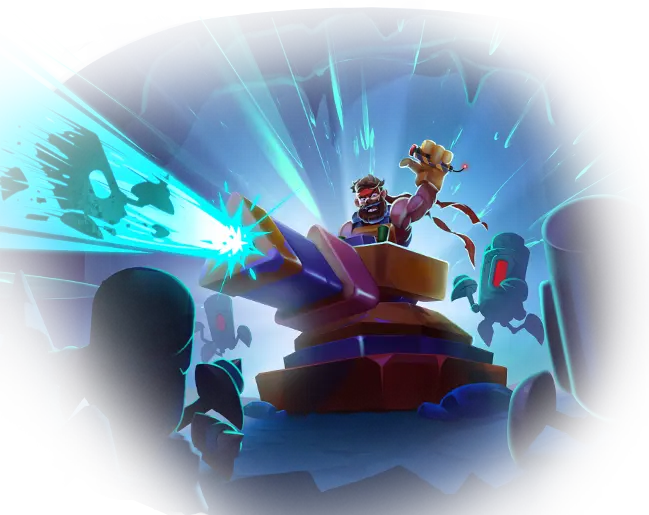
When enemies appear, they activate Hero Drops, introducing a battle between the miner at the bottom of the screen and the approaching machines.
The Hero fires at enemies, while surviving robots advance toward him. Each enemy carries between one and three lives, and reaching the bottom row allows it to attack the Hero.
The Hero can also lose lives, meaning that the battle has a genuine survival structure within the game's rules.
And destroying an enemy does more than remove a threat.
Defeated robots are replaced by paying symbols or features, potentially generating new combinations, upgrades and cascades.
This is where Mine Defender begins separating itself from a traditional slot.
Shooting enemies becomes part of the machinery that produces winning opportunities.
Combat isn't simply happening alongside the reels.
It is interacting with them.
What Makes Mine Defender Post-Reel?
The most important distinction is that Mine Defender introduces offensive and defensive mechanics directly into the payout system.
The Hero begins a regular round with one life and one shot, but special symbols can upgrade his capabilities.
Life adds health, up to a maximum of three.
Shot increases the number of projectiles fired during each shooting round.
Spread allows three projectiles to fire simultaneously.
Other features introduce more dramatic interventions.
Pushback moves advancing enemies away from the Hero.
Laser damages enemies along a straight line.
Airstrike attacks multiple enemy positions.
Bomb eliminates regular enemies and damages bosses.
Meanwhile, Coin and Multiplier symbols contribute directly to the monetary outcome.
Each of these mechanics has a defined consequence within the environment.
A weapon upgrade can change how effectively enemies are destroyed. Pushback changes their position. Defeating a robot changes the symbols occupying the grid.
This resembles the logic of an arcade defence game more than that of a traditional slot.
But there is one familiar Post-Reels contradiction.
The player collects the upgrades without choosing how to use them.
You don't select targets, position defences or decide when to fire a particular weapon.
The system makes those decisions automatically.
Mine Defender gives us the mechanics of defensive combat, but not the strategic responsibility.
Mass Attack: When the Grid Becomes a Survival Arena
The most radical transformation happens in Mass Attack.
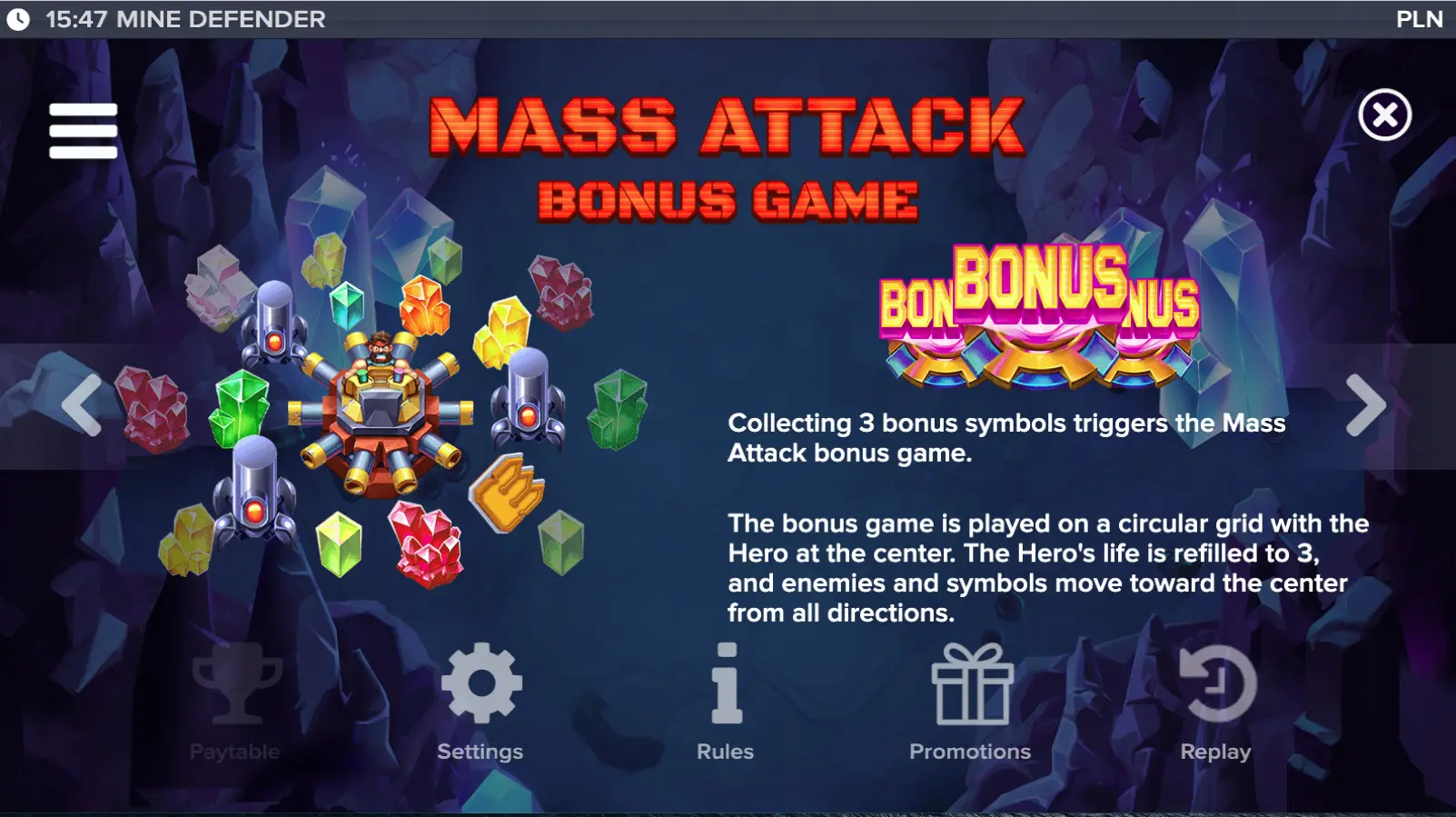
Collecting three Bonus symbols replaces the rectangular grid with a circular battlefield.
The Hero moves to the centre.
Enemies and symbols begin approaching from every direction, travelling inward along radial paths.
The Hero starts with three lives, while certain weapon upgrades and multipliers collected during the triggering game round carry into the feature.
The battlefield is now built around a simple visual objective:
Defend the centre.
Unlike the regular game, where enemies advance from above, Mass Attack surrounds the Hero with threats from multiple directions.
The circular layout changes how the action is presented and how enemies approach.
Weapons fire outward.
Enemies move inward.
Defensive features interrupt the advance.
The battlefield repeatedly changes as enemies are defeated and new symbols arrive.
It resembles a simplified survival or tower-defence game, although the player cannot place defences or control the Hero directly.
The important innovation is the relationship between space, survival and payout generation.
The grid is no longer simply an arrangement of symbols.
It has become an arena where surviving another wave is part of the game's progression.
Fifty Enemies and a Final Boss
Mine Defender also introduces something increasingly common among experimental slots:
a defined objective beyond simply completing a number of free spins.
Mini-Bosses can appear during the base game. These 2×2 enemies have ten lives and carry Trophy Coins, whose values are multiplied by the global multiplier when the bosses are defeated.
But the main objective is larger.
Defeating 50 enemies across the relevant battle progression triggers the Final Boss encounter.
The game then moves into a 5×6 battle screen containing enemies, coins and multipliers.
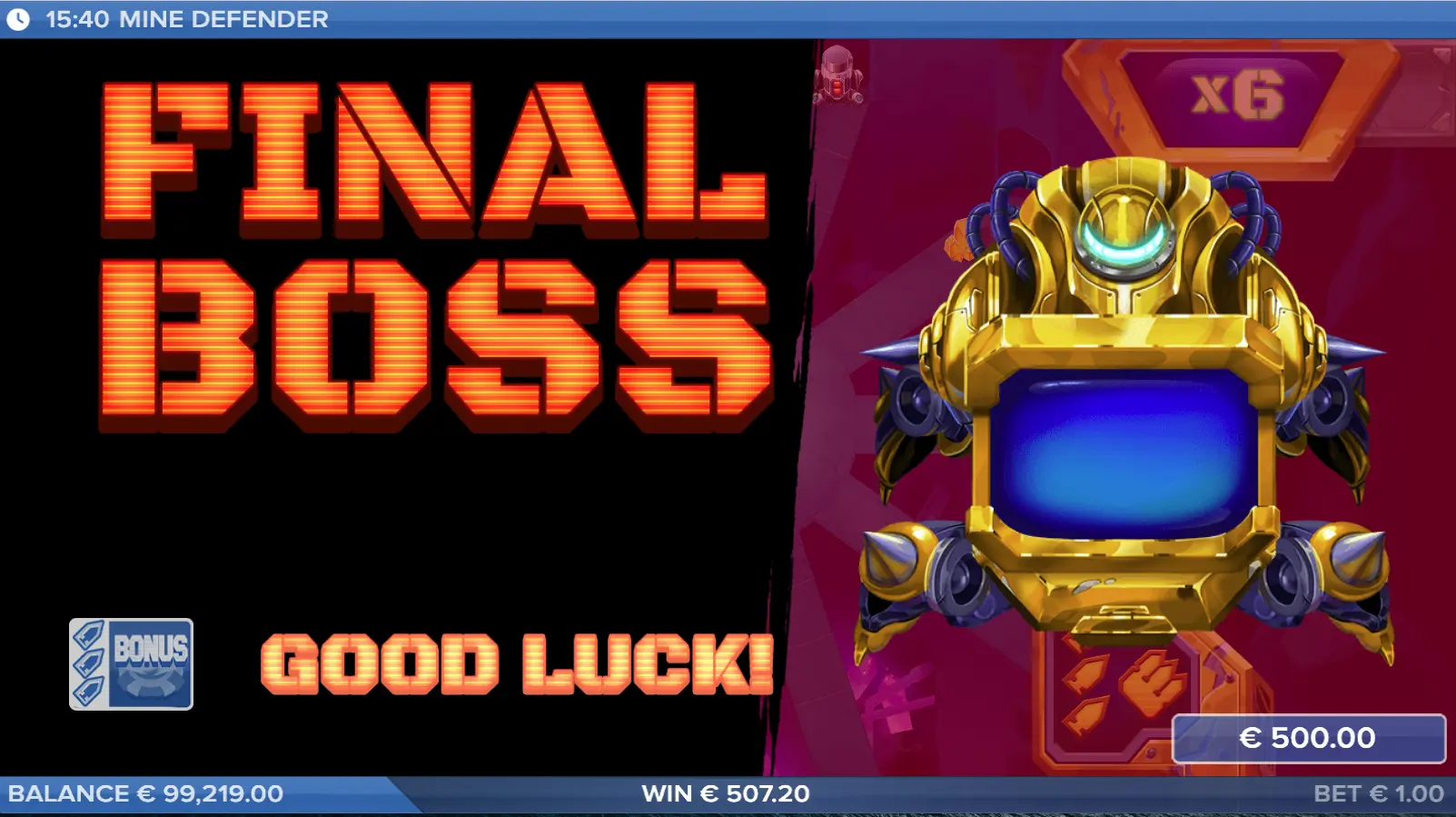
The Final Boss occupies a massive 3×3 section of the grid and has 50 lives.
The battle continues until either the Hero or the boss is defeated.
Victory awards the Final Boss's Trophy Coin multiplied by the global multiplier.
This creates an important difference from conventional free-spin bonuses.
You aren't simply waiting for a counter to reach zero.
You are watching an ongoing confrontation move toward a final opponent.
And defeating that opponent becomes the natural conclusion of the sequence.
The slot has borrowed the structure of an arcade boss battle.
Does the Combat Actually Work?
Visually and technically, Mine Defender is excellent.
ELK Studios has developed a recognizable approach to elaborate, character-driven slot mechanics, and Mine Defender benefits from that experience.
The character animations are polished.
The robotic enemies have convincing movement and attack sequences.
Weapons, explosions and defensive effects are visually satisfying.
The sound design also deserves attention. Gunfire, impacts and mechanical effects reinforce the feeling of an active battlefield rather than a static gambling interface.
And importantly, the battles can create genuine tension.
Watching enemies approach a Hero with limited lives, while different weapons activate and the battlefield evolves, can be surprisingly exciting.
The strongest moments come when several elements interact: enemies advance, weapons destroy multiple targets, new symbols appear and the global multiplier continues developing.
The animation and sound work together particularly well during these sequences.
But there is a weakness that feels familiar from ELK's other experimental titles.
The bonuses can sometimes feel strangely scripted.

Spectacular Battles, Predetermined Feeling?
We encountered a similar criticism in Concrete Cowboys.
That game's five-drop bonus could sometimes concentrate most of its meaningful action around one particularly active drop.
Mine Defender creates a comparable impression, although through a very different system.
Despite the weapons, advancing enemies, limited lives and apparent danger, some bonus sequences feel overly choreographed.
The battle looks unpredictable.
The action can be spectacular.
But occasionally, the sequence feels as though it is unfolding toward an outcome already decided long before the final enemy falls.
That doesn't mean the game is literally scripted. We have no evidence for such a claim.
It's a criticism of how the experience feels.
And not everyone will consider it a disadvantage.
For players who enjoy elaborate animations, escalating battles and automated spectacles, Mine Defender can be extremely entertaining.
Others may find the absence of control more noticeable once the novelty of the combat begins wearing off.
The contradiction is especially interesting:
Mine Defender creates the tension of an action game without giving the player the responsibility for surviving it.

What Is Mine Defender Becoming?
A tower-defence game?
A survival shooter?
An automated arcade battle?
There are elements of all three.
Mine Defender borrows the defensive logic of games in which enemies advance toward a protected position, resources improve survival capabilities and increasingly difficult encounters lead toward a final boss.
Its closest relative within Post-Reels may be Space Donkey.
Both games feature automated combat, enemies, weapons, survival mechanics and boss encounters.
But they approach those ideas differently.
Space Donkey recreates the atmosphere of classic arcade games through separate bonus modes.
Mine Defender develops a consistent defensive combat system across the base game and its bonus, even transforming the geometry of the battlefield in Mass Attack.
It also shares some DNA with ELK's own Concrete Cowboys, particularly the way characters and features operate inside a grid rather than merely appearing as conventional paying symbols.
The main achievement is not simply the number of features.
Mine Defender makes combat part of the slot's underlying structure.
And that is precisely what makes it Post-Reel.

Is Mine Defender Still a Slot?
Technically?
Absolutely.
The player selects a stake, initiates a game round and receives outcomes governed by the game's gambling mathematics.
Despite the defensive mechanics, there is no manual aiming, strategic weapon selection or direct character movement.
The Hero fights automatically.
The robots advance automatically.
The battles resolve according to the game's rules.
But experientially, things become more interesting.
During the base game, enemy movement and weapon upgrades alter the flow of the grid.
During Mass Attack, the game stops resembling conventional reels altogether.
And by the Final Boss encounter, the player is watching something much closer to an automated arcade battle than a familiar slot bonus.
The Hero has health.
The enemies have health.
The weapons have different functions.
The battlefield has spatial rules.
And the entire sequence has a final objective.
Yet the player remains outside the fight.
That is the defining contradiction of Mine Defender.
The battlefield feels like a game, but the battle doesn't belong to the player.
Post-Reels Verdict
Mechanical Innovation: 9/10
Execution: 9/10
Post-Reel Factor: 7/10
Overall: 8.5/10
Mine Defender is another impressive example of ELK Studios pushing conventional slot design toward video-game mechanics.
Its strongest achievement is integrating automated combat directly into the grid, then transforming that same defensive concept into a circular survival arena.
The audiovisual execution is excellent, and the battles can generate genuine excitement.
But the elaborate combat also exposes the central limitation of the design.
No matter how dangerous the battlefield looks, the player isn't responsible for surviving it.
And when the bonus sequences begin to feel overly choreographed, that lack of agency becomes more noticeable.
Still, Mine Defender succeeds at creating something considerably more ambitious than a conventional slot with a few animated combat effects.
The Hero fights.
The enemies advance.
The weapons evolve.
The battlefield transforms.
And eventually, a giant mechanical boss arrives.
The game gives us almost everything we expect from an arcade survival experience.
Except the controls.
Maybe that's becoming one of the defining characteristics of Post-Reels: slots that increasingly resemble video games, while still asking the player to watch rather than play.

Related reading
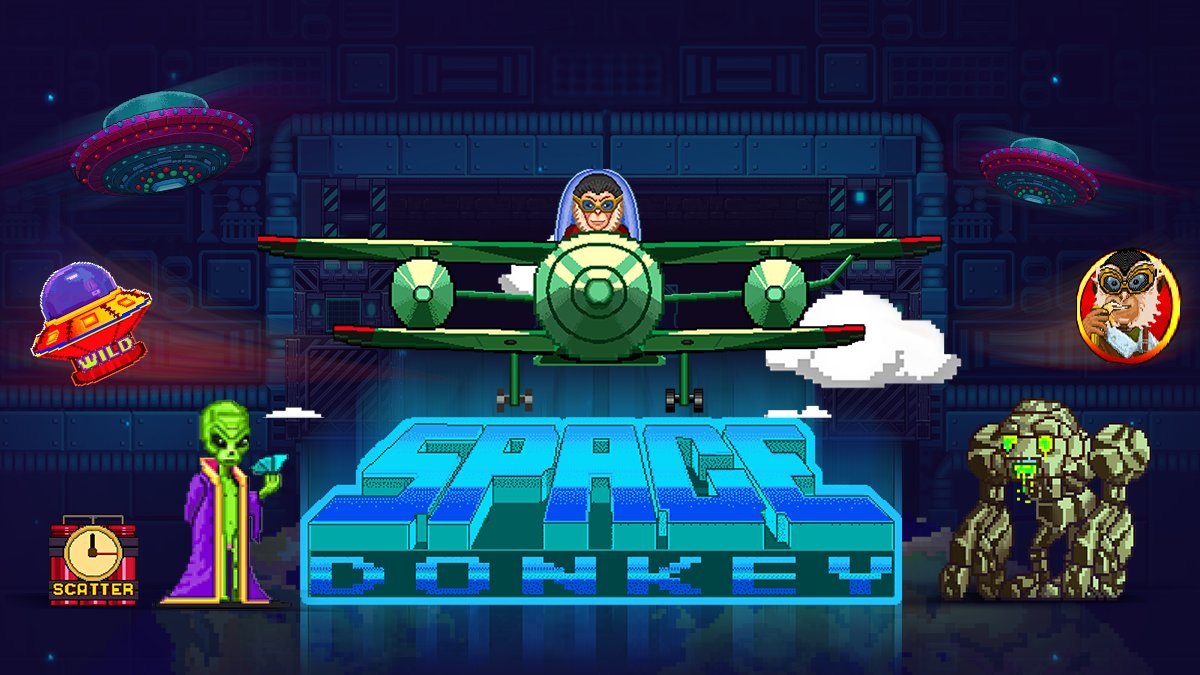
Space Donkey Slot Review: Alien-Slaying Arcade
Space Donkey is an experimental slot from Nolimit City that transforms traditional free spins into two retro arcade-style games. Players watch a Monkey navigate dangerous mazes, collect treasures, battle aliens with different weapons and confront a Mothership. With polished pixel art, engaging combat and inventive mechanics, it delivers the excitement of classic arcade gaming — without giving players direct control.
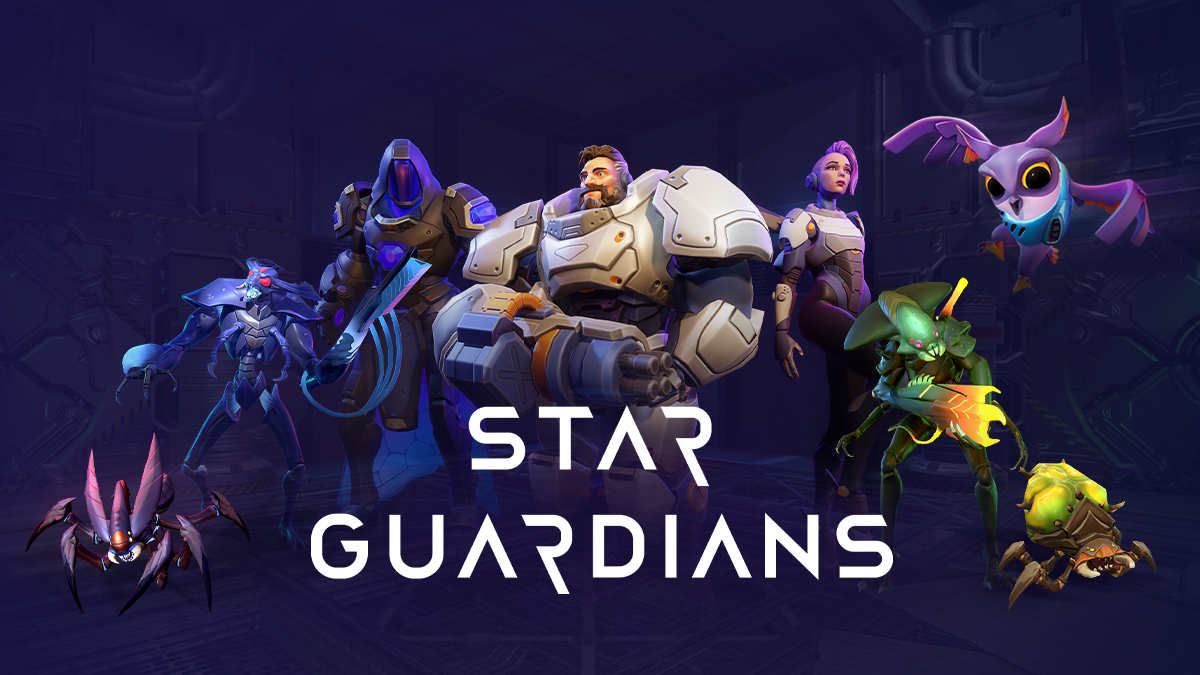
Star Guardians Slot Review: Sci-Fi Shooter
Star Guardians is an experimental third-person shooter slot from Evoplay where players manually move, aim and shoot through 3D environments, choose between distinct characters, collect loot and fight alien enemies. Ambitious and highly original, it pushes far beyond traditional slot design — even if its rough controls and uneven execution hold the experience back.