

Post-Reels is AffNova’s series about slots that are starting to behave like something else — games that move beyond traditional reels through unusual mechanics, moving characters, progression systems and ideas borrowed from other types of games.
In our first Post-Reels review, Concrete Cowboys turned the slot grid into a playfield. Read the Concrete Cowboys Slot Review on AffNova
With Chomplings by Print Studios, the transformation goes further.
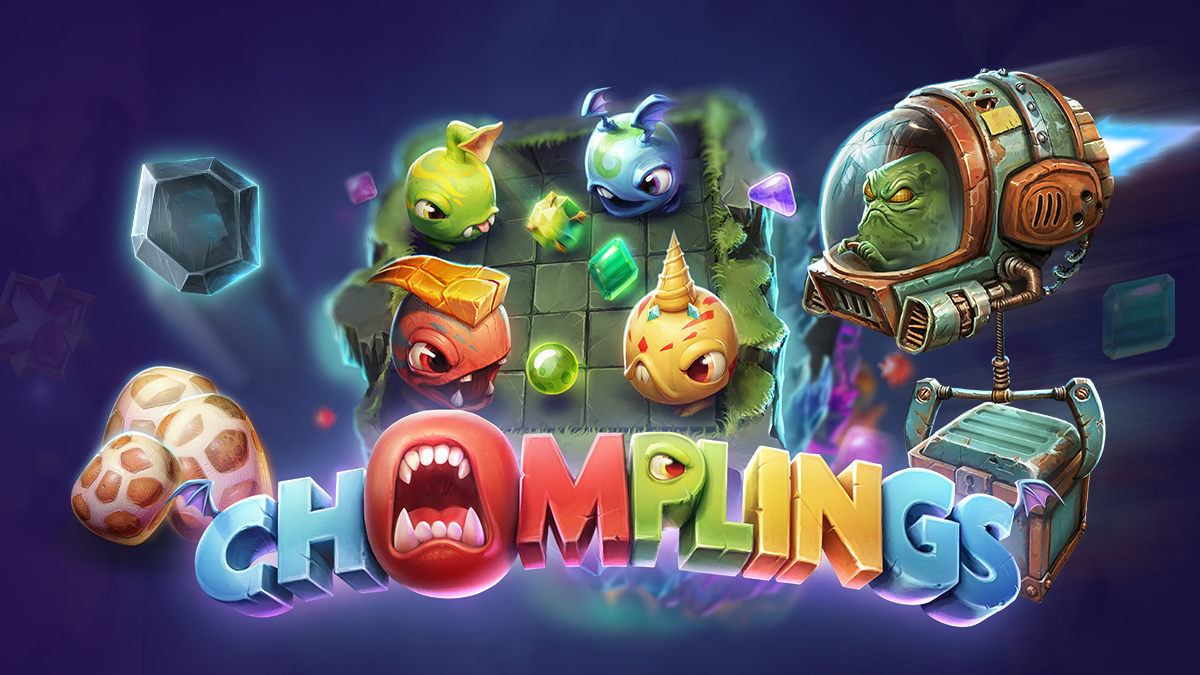
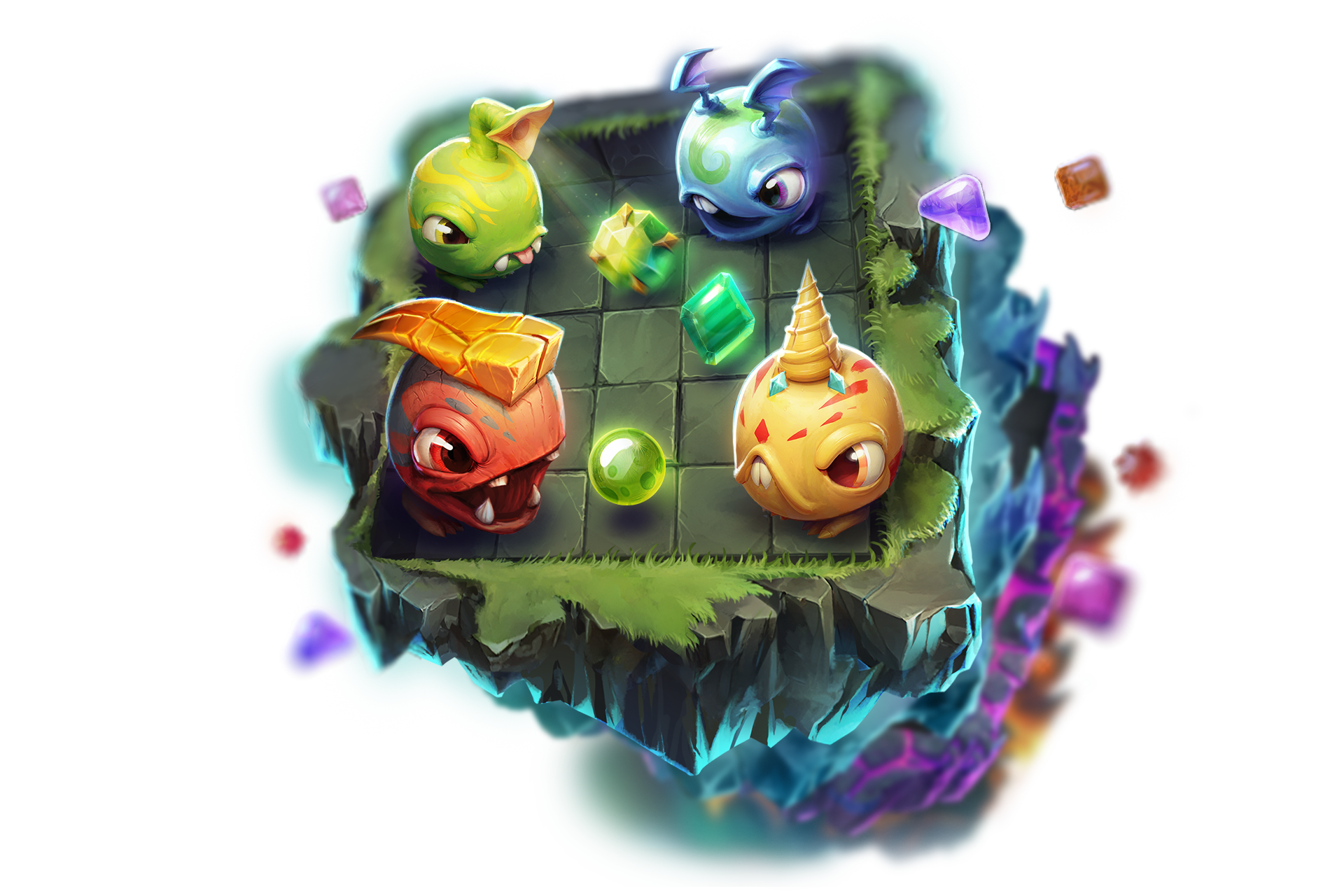
There are no traditional reels to follow. Four creatures roam an 8×8 grid divided by walls, consume gems, break into new regions, use wormholes, eat each other and activate individual abilities.
The result looks less like symbols forming wins and more like a tiny ecosystem running itself.
So this time the question becomes harder:
Is this still a slot at all?
Chomplings: Quick Facts
Feature | Details |
Provider | Print Studios |
Distribution | Relax Gaming / Silver Bullet |
Release | April 24, 2025 |
Grid | 8×8 |
RTP | 96.10% |
Feature Bet RTP | 96.15%–96.52% |
Volatility | 5/5 |
Hit Frequency | 24.37% |
Max Win | 20,000× |
Main Mechanic | Chomplings consuming symbols across a dynamic grid |
Print Studios describes Chomplings as an 8×8 slot built around a new payout mechanic, with a 20,000× maximum win and maximum volatility.
The developer’s full game page also confirms its April 24, 2025 release and positions the game around changing walls, wormholes, stacking multipliers and Chomplings consuming one another.
View Chomplings on Print Studios
Eating a Slot Instead of Spinning One
A Chomplings round begins by generating an 8×8 grid.
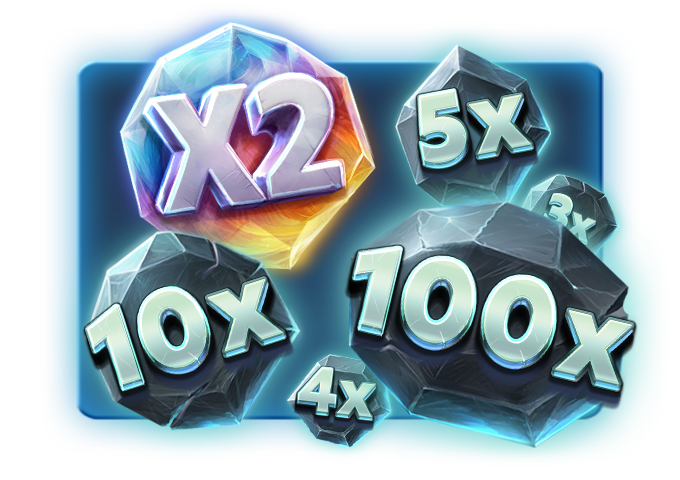
Four creatures are placed inside it. Walls divide the board into regions, while the remaining spaces fill with gems, multiplier rocks, eggs and other symbols.
Then the creatures start moving.
They travel orthogonally through whatever areas they can reach and consume objects in their path. If every available symbol disappears, the entire grid regenerates with a new wall configuration and the process continues.
If the Chomplings can no longer reach anything, the round ends.
That already changes the basic logic of a slot.
The important question isn't:
Which symbols landed next to each other?
It is:
What can the creatures reach before the environment stops them?
And each Chompling has its own identity.
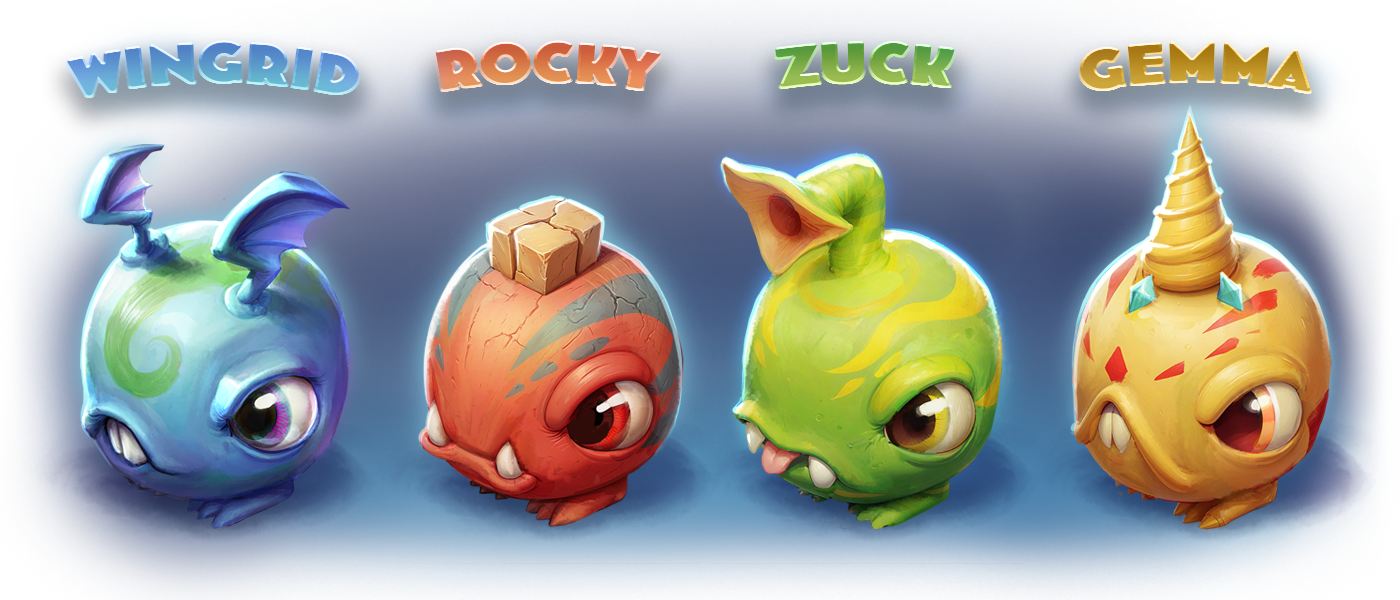
Wingrid, the blue Chompling, can move into another region after clearing its current one.
Rocky, the red Chompling, can destroy a wall.
Zuck, the green Chompling, can consume gems from another region.
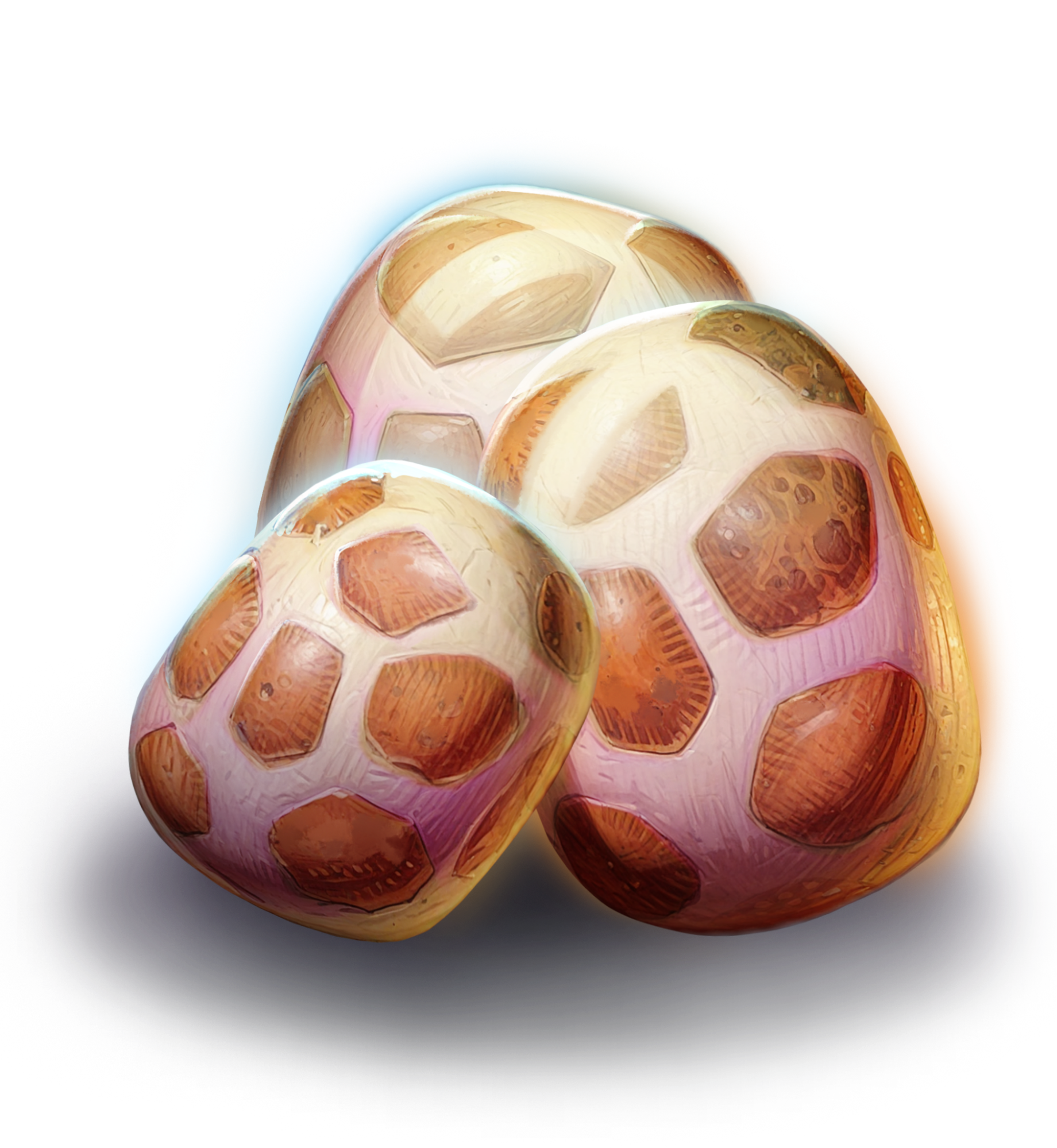
Gemma, the yellow Chompling, upgrades regular gems to premium versions.
They can even consume each other, charging these special abilities in the process.
These are not simply four differently colored Wild symbols.
They are four autonomous agents operating under different rules.
What Makes Chomplings Post-Reel?
There is a superficial similarity to character-driven collection slots such as ELK Studios’ CollectR games.
Characters move. Objects disappear. The grid changes.
But Chomplings arrives at something noticeably different.
Here, movement itself becomes part of the win engine.
Consumed symbols fill a progress meter. Once that meter is full, the displayed win amount is multiplied by the current multiplier and paid out. The meter then resets and a new target appears.
The game is therefore not evaluating a normal combination and dressing it up with animation afterwards.
The creatures' movement through the environment is how the result is constructed.
Walls matter.
Distance matters.
Access matters.
A Wormhole can suddenly move a Chompling into an inaccessible region. Walls can rotate after movement has stopped, creating entirely new routes. Eggs introduce additional creatures. Multiplier rocks increase the value accumulating beside the meter.
Print Studios itself later described Chomplings as a game that allowed the studio to experiment with new mechanics and challenge conventional slot design.
That is exactly why it belongs in Post-Reels.
When the Grid Becomes an Ecosystem
The strongest part of Chomplings is that the board feels alive.
That comes partly from the mechanics and partly from the characters.
Wingrid, Rocky, Zuck and Gemma have distinctive designs, names and abilities. They are expressive enough to feel like inhabitants of the game rather than mascots pasted around it.
And the environment reacts around them.
Walls disappear.
Other walls rotate.
Wormholes open.
New creatures hatch.
Regions become accessible and inaccessible.
Chomplings disappear inside each other and transfer their accumulated ability charges.
Print’s official product sheet emphasizes exactly this constantly changing playing field: walls collapse and shift, wormholes transport creatures, multipliers stack and Chomplings can devour one another to activate special abilities.
That is why ecosystem feels more appropriate than playfield.
A playfield contains objects.
Chomplings contains actors interacting with objects, space and each other.
Complex, But Not Confusing for Long
Looking at Chomplings for the first time can be intimidating.
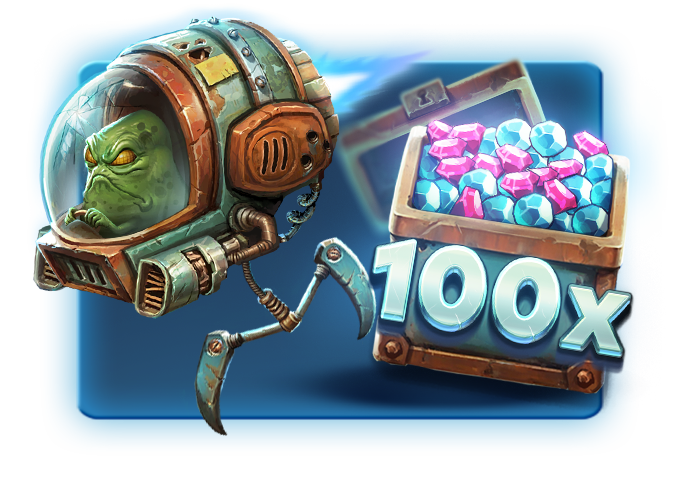
There are four creatures, walls, six gem types, premium gems, eggs, multipliers, a win meter, different abilities, wormholes and possible wall rotations all competing for attention.
But the basic logic becomes surprisingly easy after a few rounds:
the Chomplings eat whatever they can reach.
Everything else builds from that.
Rocky breaks barriers.
Zuck reaches distant gems.
Gemma improves food quality.
Wingrid finds another territory.
The complexity therefore feels layered rather than arbitrary. You don't need to understand every interaction during the first spin to understand what the game is trying to accomplish.
That is important for experimental slots.
Innovation stops being useful when understanding the game becomes harder than enjoying it.
Chomplings mostly avoids that problem.
Does It Actually Work?
Yes.
And importantly, the mechanics are not only visual.
The eating directly fills the win meter. Multiplier rocks affect payout value. Premium gems accelerate progression. Character abilities alter how much of the grid can be consumed.
There is a clear relationship between what the Chomplings physically do and how the round develops mathematically.
That makes the chaos rewarding to watch.
The characters can also create unexpectedly dramatic sequences. A Chompling reaches a new region, another gets consumed, an ability activates, walls disappear, more gems become accessible and the round suddenly continues much longer than it appeared capable of doing seconds earlier.
It feels like watching a little system discover another way to survive.
The only curious contradiction is the same one that appears repeatedly in Post-Reels:
the game looks strategic, but you aren't the strategist.
The Chomplings make the decisions.
You watch.
What Is Chomplings Becoming?
A puzzle game?
A creature simulation?
An automated maze?
There are pieces of all three.
But Chomplings doesn't quite imitate any particular genre.
Instead, it borrows a very video-game-like concept:
agents navigating an environment according to different abilities.
That distinction makes it more radical than simply replacing paylines with clusters.
There is effectively no traditional reel experience underneath waiting to be uncovered.
Take away the Chomplings, the walls and their movement logic, and you haven't stripped the game back to a basic slot.
You have removed the game itself.
That may be the clearest sign yet that we are genuinely entering post-reel territory.
Is Chomplings Still a Slot?
Technically?
Yes.
Relax Gaming lists Chomplings as a Video Slot, distributed through its Silver Bullet partnership with Print Studios.
View Chomplings on Relax Gaming
The player still selects a stake, initiates a round and receives an RNG-determined monetary outcome.
Experientially, though?
Barely.
Chomplings doesn't feel like a slot that has added some unusual features.
It feels like a small autonomous game system that happens to have gambling mathematics underneath it.
There are no combinations to watch forming in the traditional sense.
Instead, creatures explore.
They eat.
They collide.
They evolve the state of the board.
And eventually the ecosystem either finds another path forward...
or dies.
If Concrete Cowboys showed us what happens when a grid becomes a playfield, Chomplings takes the next step.
The playfield has started living on its own.
Post-Reels Verdict
Mechanical Innovation: 9.5/10
Execution: 9/10
Post-Reel Factor: 10/10
Overall: 9/10
Chomplings is one of the clearest examples of why Post-Reels exists.
It doesn't simply replace paylines with another payout mechanic.
It changes what the player watches.
Instead of reels producing combinations, we watch characters navigate an environment and determine what can happen next.
The strange part is that the more alive Chomplings becomes...
the less the player actually controls it.
Maybe the future of the slot isn't more interaction.
Maybe it is watching increasingly complex little worlds play themselves.

Related reading

Concrete Cowboys Slot Review
Concrete Cowboys is an experimental 5×5 building slot from ELK Studios where four color-coded Collectors move through the grid, gather symbols and activate features such as tunnels, upgrades, transformations and dynamite. As the board expands and new minigames appear, the slot starts to feel less like a traditional reel game and more like a moving puzzle system.
War Whores Slot Review: War Becomes Entertainment
The upcoming War Whores slot from Wicked Games turns geopolitics into a dirty entertainment machine: oil and lithium become premium symbols, bombers and nukes build value, politicians become masked performers, and the Situation Room looks suspiciously like a war-themed adult website. We explore its military references, Gulf War imagery, media satire, internet memes and “militainment” — and ask whether its refusal to take any side makes the satire sharper or simply more cynical.