
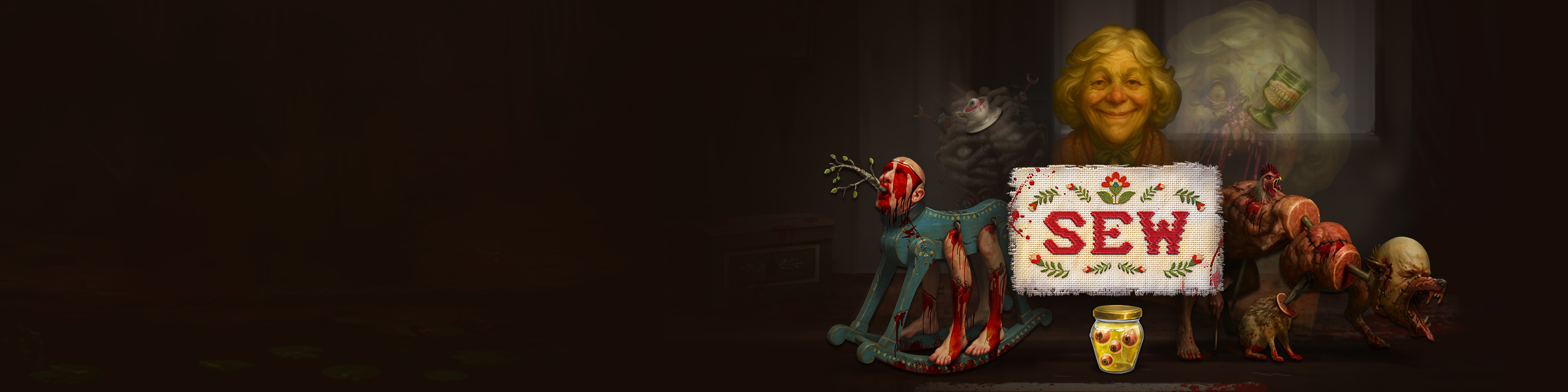

This time we have SEW by Shady Lady.
And this may be the most complete La Part Maudite game so far.
There is no complicated political satire here. No secret suburban double life. No culture-war joke.
SEW takes something much more basic: our discomfort with the human body when it stops behaving like a human body.
Fingers become counters.
Skin becomes a multiplier.
Teeth, eyes, hearts and limbs become symbols.
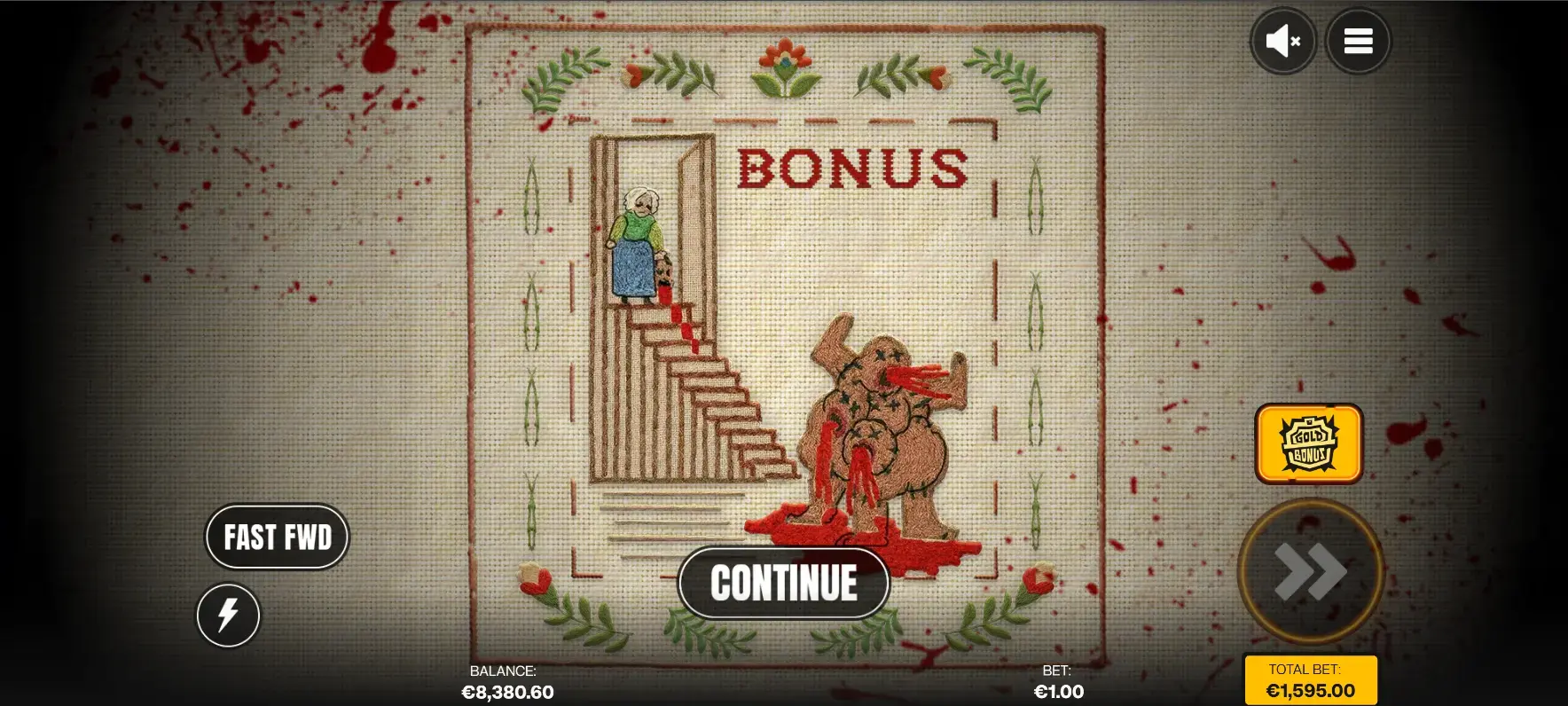
And a sweet-looking grandmother sits at her sewing machine, apparently not repairing clothes but reconstructing flesh.
The official game sheet opens with a nostalgic knitted design, then quickly undermines that cozy domestic feeling by asking what is happening “down there in the basement.” Their own summary ends with the idea of a myth being created “part by part” and in blood.
Domestic comfort transformed into body horror.
SEW: Quick Facts
Feature | Details |
Provider | Shady Lady |
Layout | 4-5-4-5-4 |
Ways to Win | 1,600 |
RTP | 96.33% / 94.00% / 92.00% |
Volatility | 10/10 - High |
Max Win | 20,000x |
Bet Range | €0.10–€50 |
Hit Frequency | 20.59% / 20.09% / 19.66% |
Bonus Frequency | 1 in 213 / 217 / 222 |
Average Bonus Win | 76.19x |
Bonus Buy | Yes |
The game is officially rated 10 out of 10 for volatility, with a 20,000x maximum win and several RTP configurations.
She Smiles
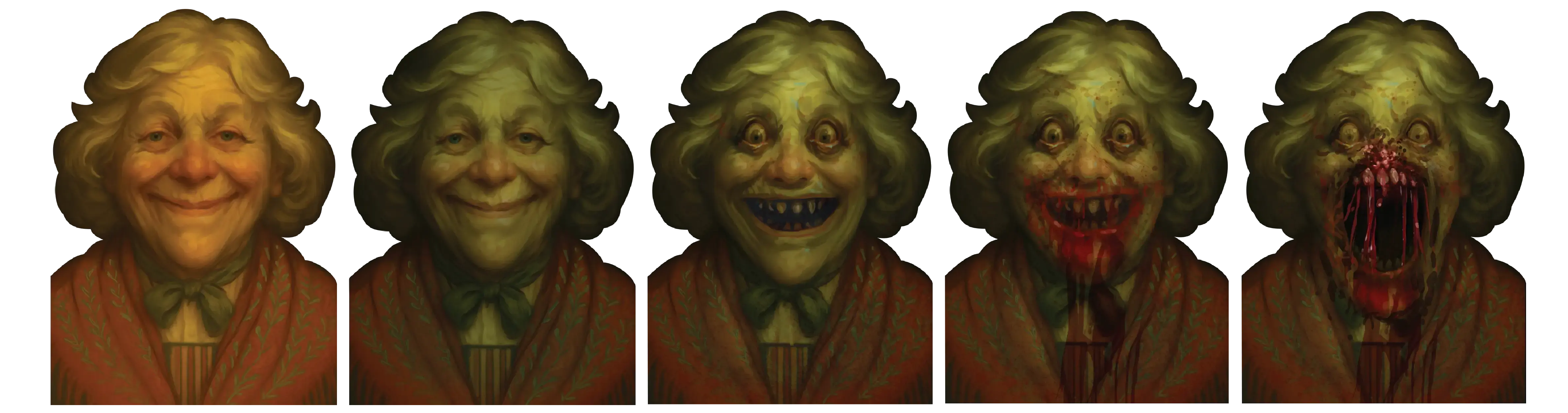
The old woman is clearly the game’s main character, but she never appears as a constant figure. She appears through the Scatter symbol, while the bonus screen shows her as a woven image rather than as a fully animated character. She also appears again in the Max Win sequence.
Normally, a grandmother sewing belongs to one of the safest domestic images imaginable: old furniture, tea, cakes, clothes being repaired.
Shady Lady poisons that image.
Granny smiles too widely. With three Scatters, the smile already becomes disturbing as she reveals her teeth. With four Scatters, it grows even more exaggerated and unnatural. And with five Scatters, the transformation goes further still: she opens her mouth wide, now covered with blood, turning the familiar grandmotherly face into something openly monstrous.
The sewing machine is still there. The cosy room is still there.
But suddenly you realize that whatever she is sewing probably isn't a cardigan.
That progression matters because the horror does not appear all at once. The more the game rewards you, the more Granny's face collapses from familiar into grotesque.
And that contrast is essential to SEW: the environment never feels truly safe or comfortable to begin with - it only borrows the familiar language of a grandmother’s home. With every Scatter, that uneasy domestic space becomes more openly grotesque, until any trace of comfort is gone.
When the Body Stops Being “You”
Julia Kristeva gives us probably the best concept for understanding why this feels so unpleasant: abjection.
In Powers of Horror, she describes the disturbing things that destabilize the boundary between ourselves and what should remain outside us - blood, waste, corpses, wounds and exposed bodily matter.
SEW practically converts that idea into slot symbols.
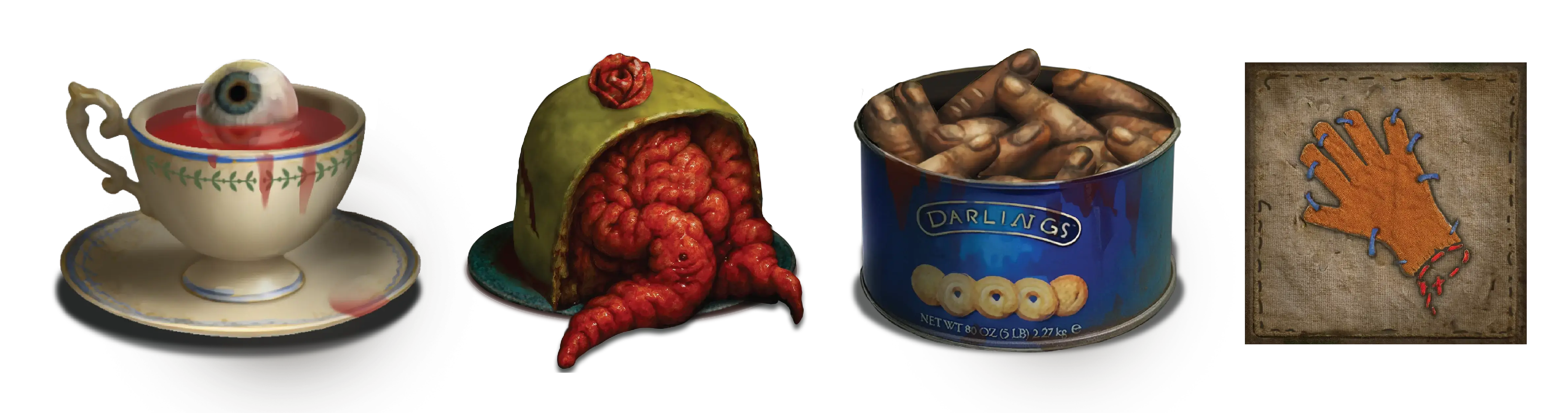
An eye outside the skull.
Teeth outside the mouth.
A detached finger inside a French cookie box.
Skin treated like cloth.
These things are disturbing because they are not completely alien.
They are still recognizably ours.
The body stops being the protected container of the self and becomes material.
Something that can be cut.
Moved.
Multiplied.
Stitched.
And given a monetary value.
The Monster Is Made From Things That Should Not Fit Together
Noël Carroll approaches horror from another useful direction.
In The Philosophy of Horror, he discusses monsters that disturb because they violate ordinary categories: living and dead, human and animal, one organism and several organisms, familiar and impossible.
That fits SEW almost perfectly.
The game's creatures and win screens are horrifying not necessarily because they look powerful, but because their anatomy feels wrong.
The individual pieces remain understandable.
The final organism does not.
A mouth appears where it should not.
Limbs multiply.
Recognizable body parts are stitched into structures that should never have become one body.
You understand everything you are looking at and simultaneously reject the way it has been assembled.
That is one of the foundations of body horror.
Everything already feels contaminated.
Dirty browns.
Faded reds.
Unhealthy flesh tones.
Old metal.
Stained fabric.
Bloodied tools.
The palette does not look “beautifully dark” in the conventional horror-game sense.
It looks unclean.
And that matters.
Before Granny exposes her teeth or a blade touches a finger, the room already feels like somewhere you would rather not touch anything.
Is Granny a Norn - or Something Worse?
There is another strange layer running through SEW’s win celebrations.
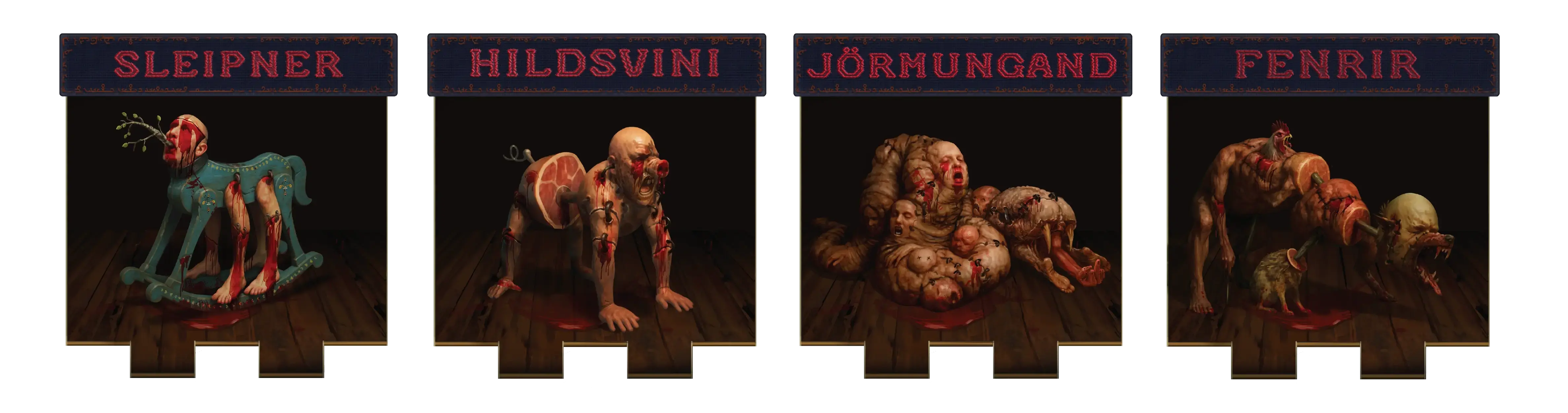
The progression uses names from Norse mythology:
Sleipnir → Hildisvíni → Jörmungandr → Fenrir
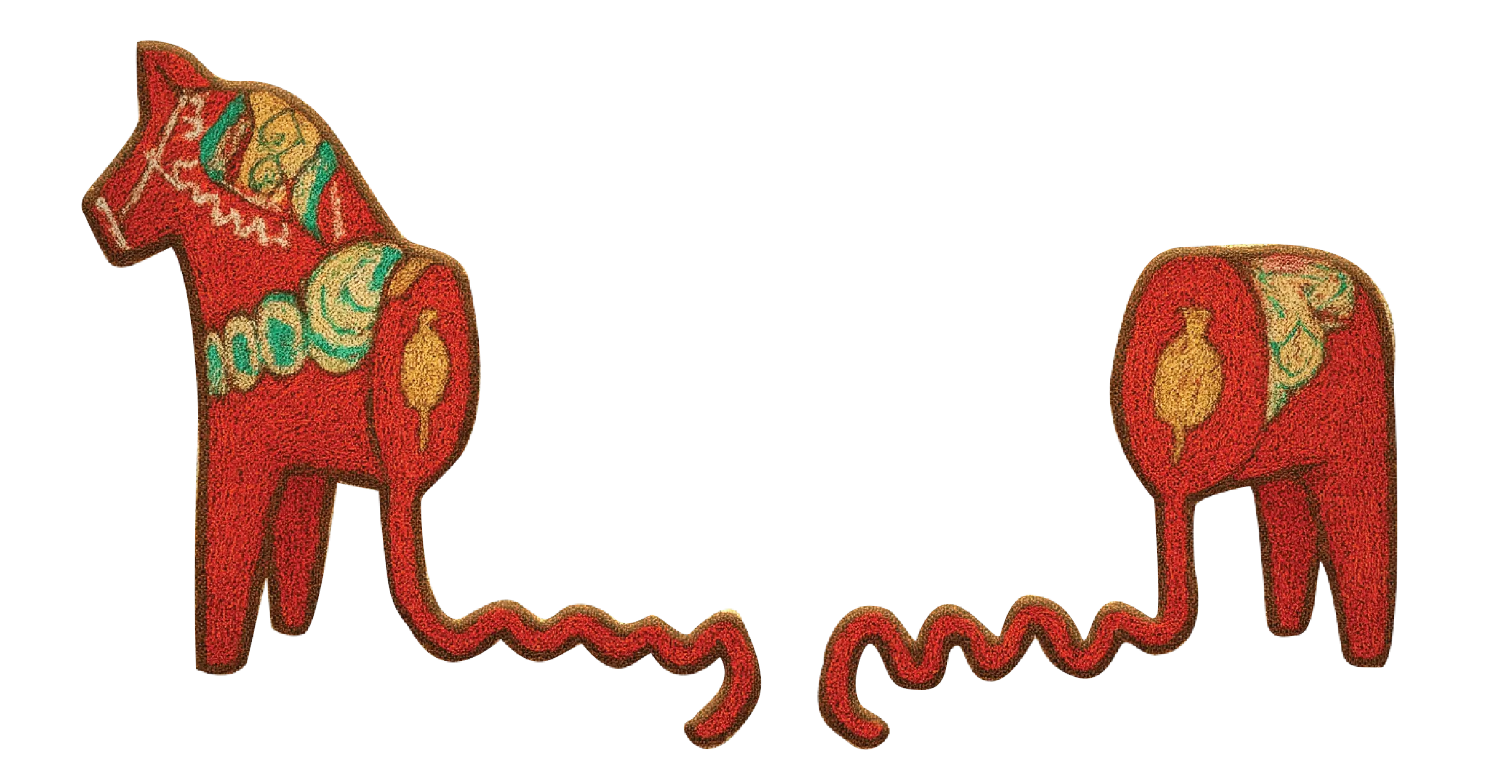
Sleipnir is Odin’s eight-legged horse, Hildisvíni is associated with Freyja, Jörmungandr is the World Serpent, and Fenrir is the monstrous wolf tied to Ragnarök.
There is a clear escalation here. The lower win stages begin with strange mythological animals associated with the gods, while the larger wins move toward the genuinely monstrous and apocalyptic. By the time Fenrir appears, even the win celebration has become another piece of horror art.
There is also an interesting thread connecting several of these creatures to Loki, a figure strongly associated with transformation, instability and broken boundaries. That does not prove Shady Lady built the game around Loki, but for a slot obsessed with bodies changing form, it is a fitting connection.
Then there is Granny.
She can be read as a grotesque version of the Norns, the female figures associated with fate in Norse tradition. It would be too strong to say she literally is a Norn, but symbolically the comparison works: she resembles a corrupted fate-weaver.
Except she is not weaving the course of your life.
She is weaving the body itself.
At the same time, she also echoes Grýla, the monstrous old woman of Icelandic folklore, as well as broader European crone figures such as Baba Yaga.
So Granny is probably most interesting when we do not force one exact identity onto her.
She feels like several old archetypes stitched together:
grandmother + witch + fate-worker + cannibalistic crone.
Which is perfectly appropriate for a game where stitching incompatible things together is the whole point.
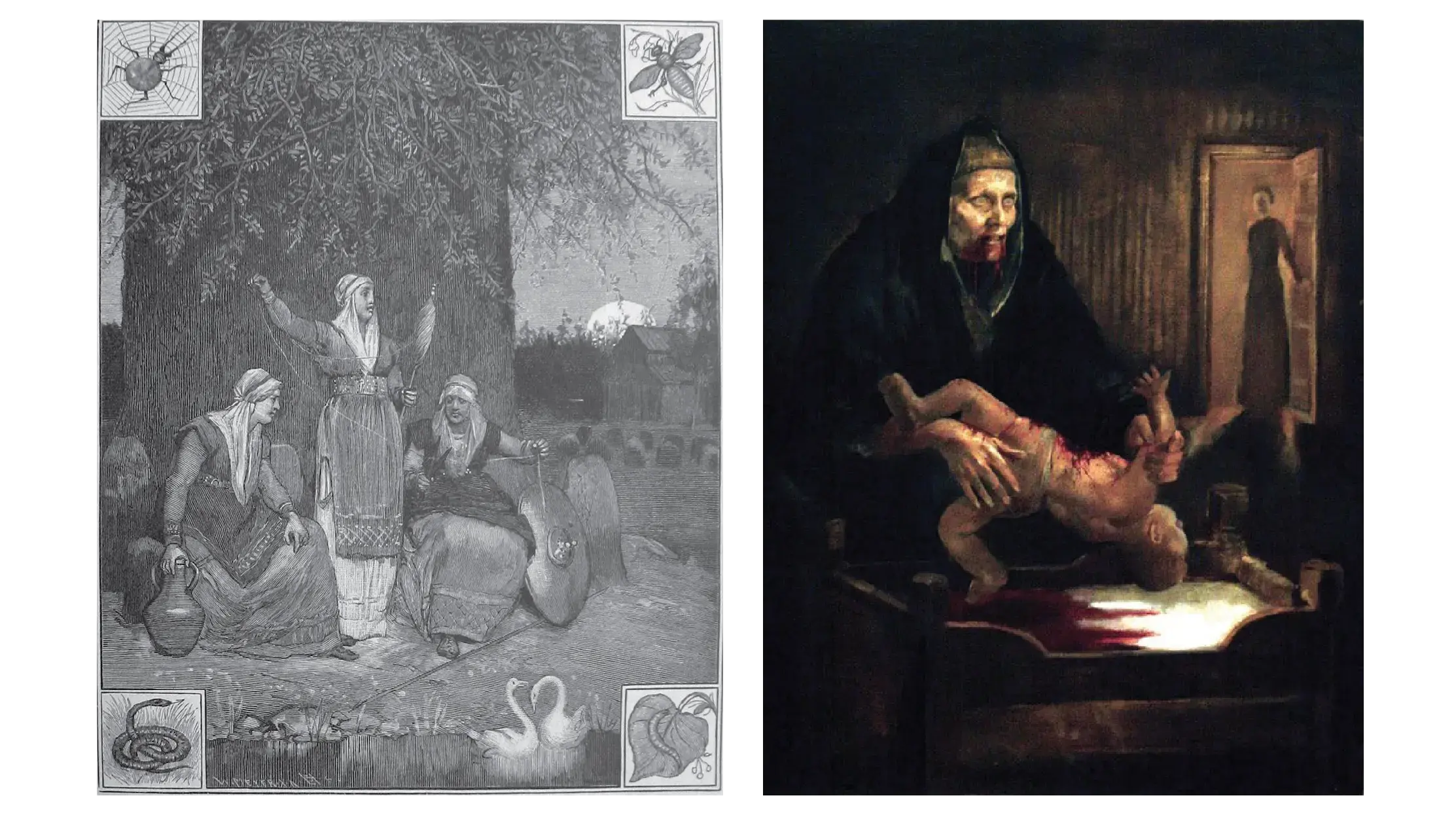
In the left - 1893 engraving by L. B. Hansen - Ludvig Bernhard Hansen (1856–1933). It is usually titled Nornorna vid Urdarbrunnen (“The Norns at the Well of Urd”) In the right - The painting by Icelandic artist Þrándur Þórarinsson.
Horror Cinema and SEW
SEW belongs to the same body-horror tradition as Tusk and John Carpenter's The Thing.
Tusk turns bodily transformation into something simultaneously ridiculous, tragic and disgusting. The premise is almost funny until you remember that a human being has been physically reconstructed into something he was never meant to become.
The Thing goes further: flesh itself loses any stable form. Heads detach, limbs multiply, bodies merge, and human anatomy becomes only a temporary arrangement.
SEW lives somewhere between the two.
Its monsters can be absurd enough to make you laugh - Finger Face and Sphincter & Bones certainly aren't subtle names - but the anatomy remains uncomfortable because every impossible creature is still made from recognizably human material.
The horror is not simply that the monster might kill you.
It is that the monster is made from the same stuff you are.
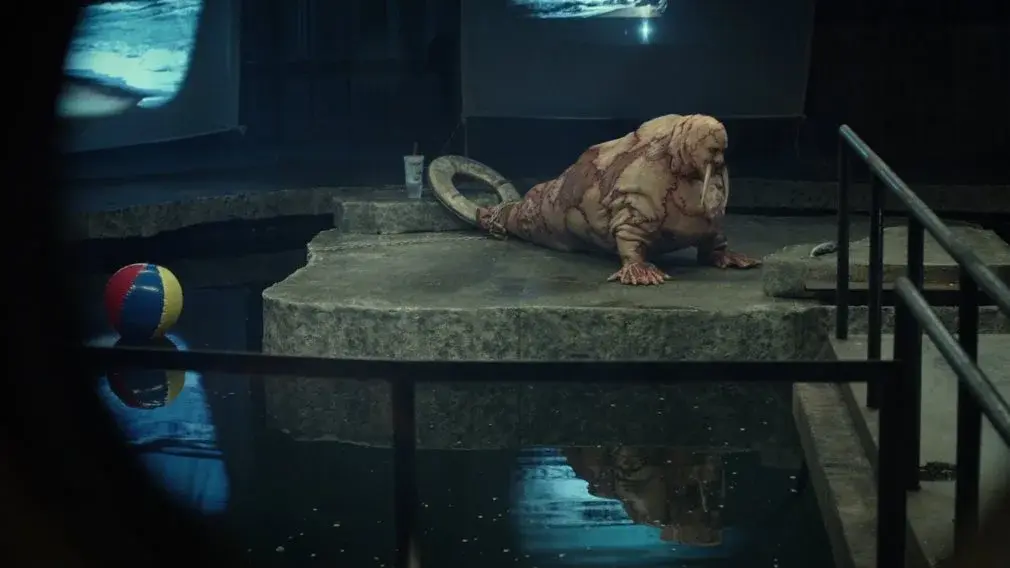
Scene from Kevin Smith’s film Tusk.
The Art of Putting Things Together Wrong
There is a strong Surrealist quality to SEW.
Hans Bellmer dismantled and rearranged the human body through his dolls, producing repeated limbs, distorted joints and figures whose individual parts remain recognizable even when the complete body feels impossible.
Meret Oppenheim achieved a similar discomfort without mutilation. Her famous fur-covered cup and spoon simply combine familiar things that should never exist together.
SEW uses both strategies.
It rearranges anatomy like Bellmer, while also creating Oppenheim-style collisions:
grandmother + scalpel
sewing machine + skin
needle + flesh
domestic comfort + mutilation
The game rarely needs completely alien imagery.
It makes ordinary things horrifying simply by stitching them together incorrectly.
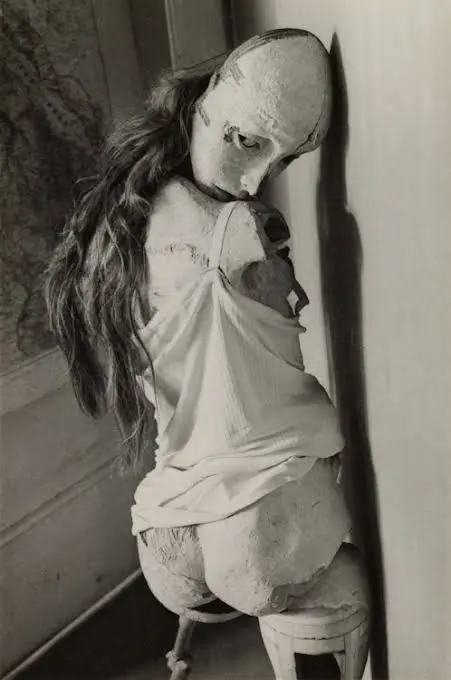
Hans Bellmer, The Doll, 1934
Where the Theme Becomes Mechanic
SEW does not leave its body horror and cultural satire on the surface.
Once the reels begin spinning, the same idea of the human body as something that can be cut, patched, assembled and improved is built directly into the game’s mechanics.
Skin becomes material, body parts become functional symbols, and the disturbing logic of the theme starts to shape how the slot actually plays.
Hot Zones Before the Basement Opens
The base game is not completely passive while you wait for the main Bonus.
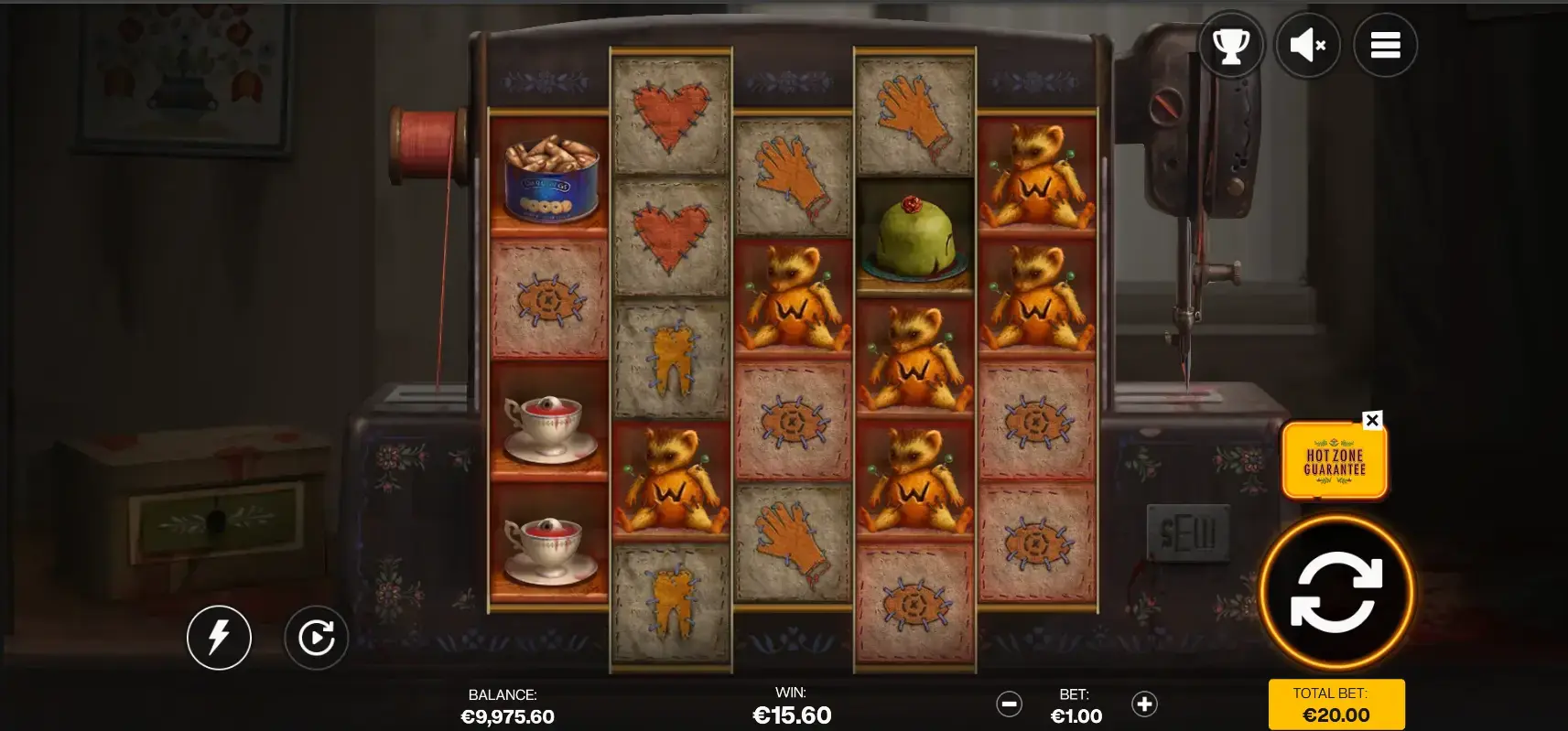
The Hot Zone Feature can trigger randomly and place special positions around the grid.
A Hot Zone may be empty, contain a multiplier, contain a Wild, or contain a Wild with a multiplier. When a multiplier is involved in a winning way, it affects the symbol count used to evaluate that position.
It is mechanically simpler than what happens in the basement, but it gives the base game an additional layer and prevents everything interesting from being locked behind the Bonus.
The Bonus Cuts Away Your Respins
Landing three Scatters triggers the Bonus and gives you 3 Hold 'n Win respins.
During the feature, only Blank Symbols, Body Part Symbols and Special Symbols can appear.
Whenever any non-Blank symbol lands, the counter resets to three.
When all three respins are used without a new symbol landing, the feature ends.
Nothing revolutionary so far.
Then Shady Lady turns the counter into fingers.
Three fingers sit beside the grid.
Use a respin without resetting the counter?
One gets cut off.
Miss again?
Another finger disappears.
Suddenly “2 spins remaining” is no longer a number on the screen.
It becomes mutilation.
That tiny design choice explains why SEW earns points that mechanically more innovative slots sometimes do not.
The mathematical concept is familiar.
The translation of mathematics into theme is exceptional.
The Bonus Literally Builds a Body
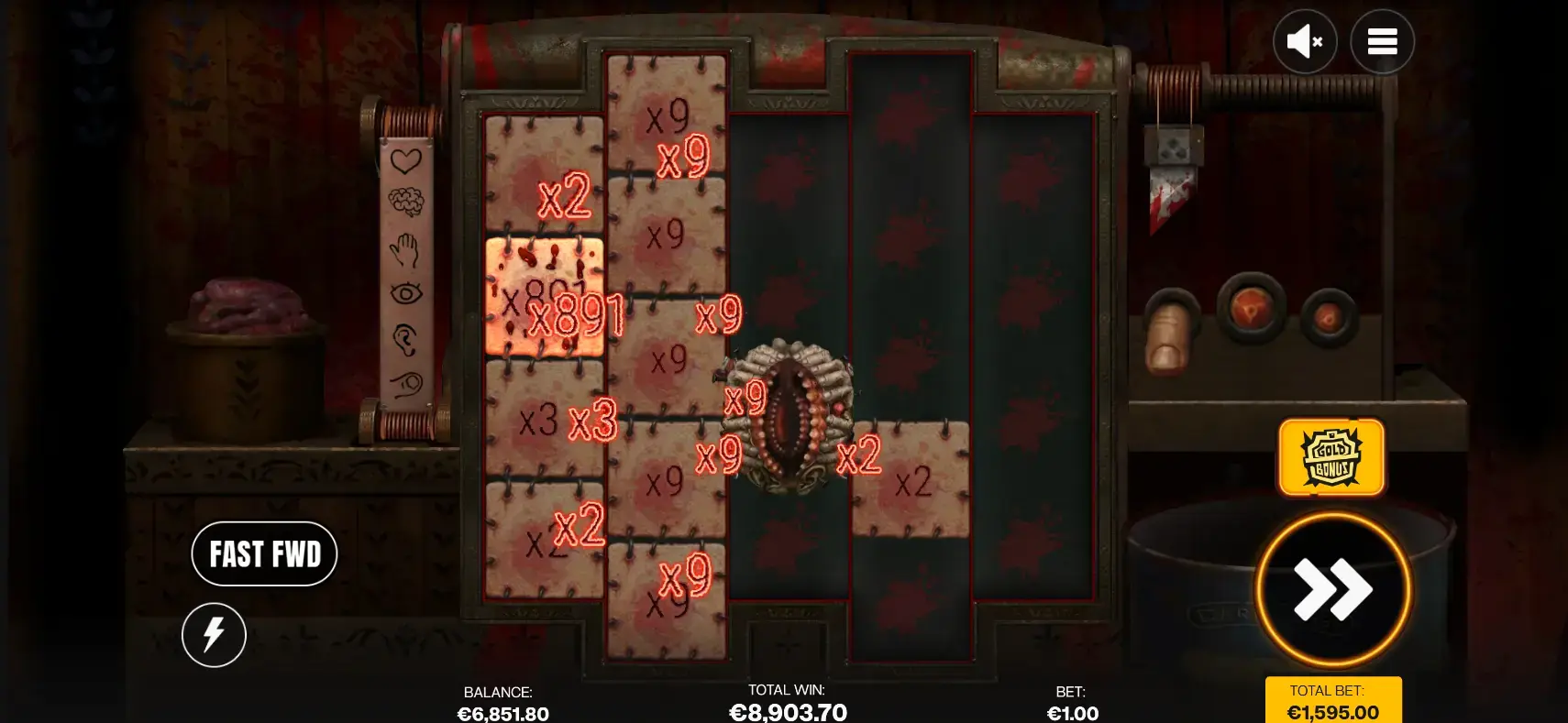
Body Part Symbols carry coin values that are awarded immediately.
But every position where a Body Part lands also begins evolving.
The first upgrade adds a skin patch and raises the position to x2.
Every further upgrade adds +1 to that multiplier, potentially reaching x999.
When another Body Part later lands there, its coin value is multiplied by the multiplier attached to that position.
So during the Bonus, the grid gradually becomes an artificial organism.
Parts arrive.
Skin grows over positions.
Existing tissue becomes more valuable.
More flesh lands on top of it.
Then the Special Symbols start operating on the body.
Ripper
Ripper fills an entire column with skin patches carrying randomly drawn x2–x100 multipliers.
If a patch already exists there, the new value is added to the existing multiplier.
Mechanically, it is a powerful column modifier.
Thematically, it looks like surgical reconstruction converted into mathematics.
Doppelganger
Doppelganger selects a random number of existing skin patches and doubles their multiplier values.
The same patch can be selected more than once.
The name fits the body-horror logic perfectly:
existing tissue reproduces itself numerically.
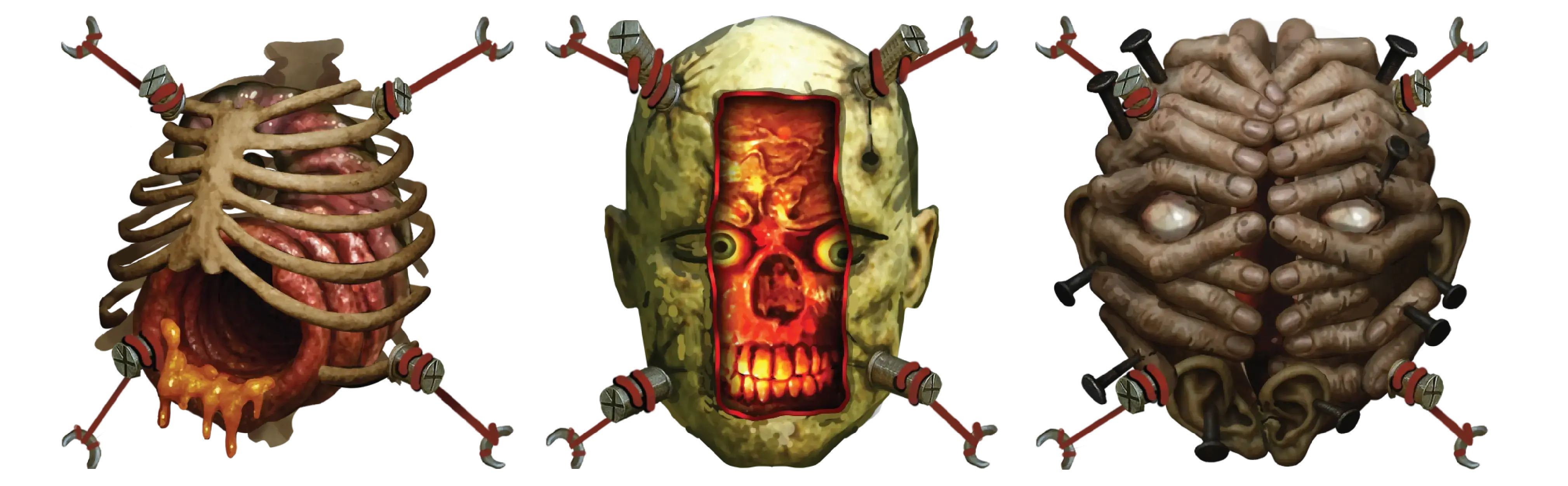
Finger Face
Finger Face collects the values of all existing skin patches and adds the sum to the multiplier of the position where it lands.
Different pieces become one larger accumulation.
Again, the mechanics and creature design speak the same language.
Sphincter & Bones
Sphincter & Bones spawns a random number of additional Body Part Symbols and places them around the play area.
More flesh for Granny's construction.
Great Grandmother
Finally, Great Grandmother permanently upgrades the hierarchy of Body Part Symbols for the rest of the Bonus.
The first appearance transforms the lowest-value body part into the second-lowest tier.
Further appearances continue pushing more of the lower-value parts upward through the hierarchy.
Even genealogy becomes a gameplay mechanic.
Grandmother.
Great Grandmother.
A family tree made from increasingly valuable body parts.
Very Shady Lady.
Super Bonus
Landing four Scatters triggers the Super Bonus.
It works like the regular Bonus with one major difference:
before the first spin, one random position becomes a Super Skin Patch with a starting multiplier of x111, x222, and so on up to x999, selected randomly.
Again:
Skin is not decoration.
Skin is mathematics.
The Mechanics Are Familiar - and That Is Fine
This is the one area where SEW is not completely original.
Strip away the fingers, stitched skin and body parts and the skeleton of the feature remains recognizable:
3 Hold 'n Win respins
reset when something lands
persistent positions
modifier symbols
growing values
Players who enjoy Hold & Win games or Money Train-style modifier bonuses should immediately understand the appeal.
Players who find this structure slower or less exciting than highly dynamic free-spin or cascade systems may feel the same limitation here.
Even Shady Lady openly describes SEW as its take on Hold & Win, rather than pretending the core format is something entirely unprecedented.
But SEW does something many games using that structure fail to do:
it makes the mechanic feel as though it could only belong to this particular game.
The structure may be familiar.
The execution is not.
The Store
Like other recent Shady Lady releases, SEW also includes The Store.
Players can increase their wager through Bonus Boost and Big Bonus Boost, guarantee Hot Zones on every spin, directly buy the Bonus or Super Bonus, purchase Enhanced Bonuses in Bronze, Silver and Gold tiers, buy Highlight Reels, or use Loot Boxes for a chance at stronger enhanced bonuses.
There is a lot here.
Possibly too much for players who prefer a completely straightforward base-game-to-bonus structure.
But it also means the game gives different types of high-volatility players several ways to interact with its main mechanics.
The Theme Actually Survives Contact With the Gameplay
This matters more than almost anything else in La Part Maudite.
Many horror slots look disturbing in screenshots and then become completely ordinary casino games once the reels start moving.
SEW never stops being SEW.
Respins are fingers.
Multipliers are skin.
Coin symbols are body parts.
Modifiers are grotesque organisms.
Win celebrations turn Norse mythology into reconstructed monsters.
The grandmother does not disappear once gameplay begins.
She feels like the person operating the entire machine.
Even the mechanics themselves seem stitched together by her.
The slot therefore behaves less like a collection of independent features and more like one organism.
And that is where it reaches a level most themed slots never touch.
The Appeal
One of the strongest and most authentic body-horror aesthetics in modern slots
A deliberately uncomfortable color palette that feels dirty, fleshy and unhealthy
Granny is an instantly memorable central character
Excellent collision of grandmotherly domesticity and mutilation
Strong Norse-mythology layer through Sleipnir, Hildisvíni, Jörmungandr and Fenrir
Win screens feel like pieces of horror artwork rather than generic celebration animations
The Hold 'n Win counter becoming severed fingers is an excellent theme-mechanics connection
Skin patches make multiplier mathematics physically part of the game's horror
Ripper, Doppelganger, Finger Face, Sphincter & Bones and Great Grandmother all reinforce the central concept
Connections to body-horror cinema, Surrealism and horror theory feel natural rather than artificially imposed
10/10 volatility and 20,000x max-win potential
Most importantly: nothing feels superficial
The Damage
The central Bonus still uses a recognizable Hold 'n Win foundation
Players who dislike three-respin features may find the underlying pacing less exciting than the presentation
The imagery is genuinely nasty and will immediately repel some players
The flesh-heavy reds, browns and dirty tones are intentionally uncomfortable rather than conventionally attractive
There are many Store/booster/buy options, which may feel overloaded for players who prefer simpler slot structures
Much of the game's appeal depends on actually enjoying grotesque body horror
La Part Maudite Score - 9.5/10
SEW is the first game in La Part Maudite that we would call almost perfectly suited to what this series is supposed to find.
Not because every mechanic is revolutionary.
Not because it has the biggest max win.
And definitely not because it is pleasant to look at.
It earns 10/10 because virtually everything understands what game it belongs to.
The granny.
The sewing machine.
The dirty colors.
The severed fingers.
The skin patches.
The mythological monsters.
The domestic objects.
The Hold 'n Win structure.
The feature names.
The win screens.
Even the fact that familiar mechanics have been stitched together into something that feels different mirrors the subject of the slot itself.
Tusk turns the human body into an absurd physical construction.
The Thing treats flesh as something unstable that can rearrange itself.
Hans Bellmer dismantles anatomy and puts it back together incorrectly.
Meret Oppenheim makes familiar things disturbing simply by combining materials that should never meet.
Kristeva helps explain why bodily matter outside its proper place disgusts us.
Carroll helps explain why things that violate our categories become monsters.
Lovecraft reminds us that horror becomes effective when the entire atmosphere tells us that the natural order has broken.
And Granny?
She just sits there and sews.
That is SEW.
Other slots use body horror as decoration.
SEW feels as though the entire slot has been stitched together from it.
La Part Maudite Score: 9.5/10.
The series title is inspired by Georges Bataille's 1949 work La Part maudite.
Related reading
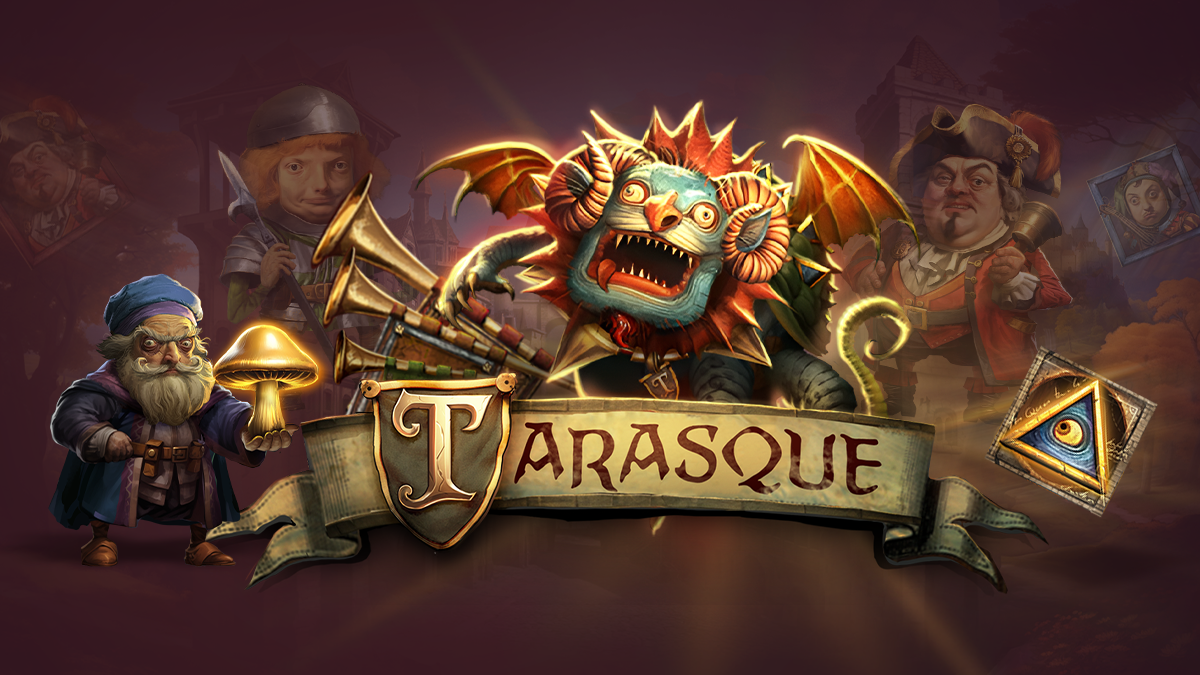
Tarasque Slot Review: The Monster France Learned to Celebrate
Welcome to the strange world of Tarasque — a slot where a medieval monster devours symbols only to vomit them back onto the reels, a mysterious Mage twists the game through transformation, and French folklore, medieval art and Catholic tradition all collide. We explore the references behind the characters, the legend that inspired the beast, and how Print Studios connects almost every visual idea directly to the mechanics — without sacrificing polish, clarity or style.
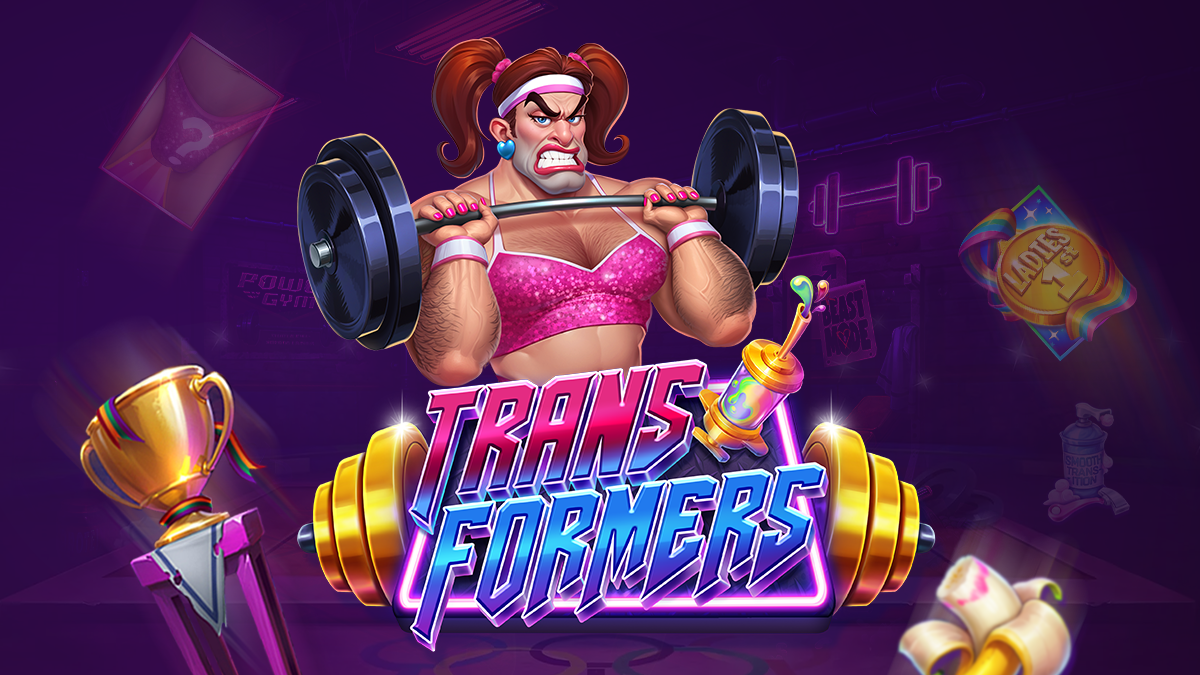
Transformers Slot Review: When Beast Mode Meets the Culture War
Welcome to the strange world of Transformers — a slot where bodybuilding, gender performance, sports controversy and parody all collide on the reels. We look at Simon-A, the “M→F” competition gag, the Beast Mode references, Mystery symbols, progressive multipliers and the game’s deliberately tasteless humor — and ask whether Wicked Games is offering real satire, pure provocation, or simply a very solid slot wrapped in cultural controversy.
