

Introduction
Every successful casino affiliate program has one thing in common: it knows where its players come from, which partnerships generate revenue, and how much each acquisition is worth. Without reliable tracking, even a well-funded affiliate marketing campaign can become difficult to manage. Missed conversions, inaccurate commission calculations, and fraudulent traffic can quietly eat into profits.
So, what is the best affiliate tracking software for casinos in 2027?
The answer depends on your business model, target markets, technology stack, and growth ambitions. Some operators need an enterprise-grade iGaming affiliate management platform with advanced reporting and multi-brand support. Others need a flexible, cost-effective solution that makes launching and managing an affiliate program straightforward.
At The Point, we approach iGaming marketing with a focus on measurable performance, scalable acquisition, and sustainable growth. We believe affiliate tracking software should do more than count clicks. It should help operators understand player acquisition, manage affiliate relationships, automate commissions, and make informed marketing decisions.
In this guide, we'll compare leading casino affiliate tracking platforms, explore essential features and commission models, examine pricing considerations, and explain how to choose the right solution for your business. Whether you're launching a new online casino or optimizing an established affiliate program, here's what you need to know before investing in tracking technology.
Top Platforms for Affiliate Tracking Software for Casinos Compared
There is no single affiliate tracking platform that works best for every casino operator. The right choice depends on the complexity of your affiliate program, the number of brands you manage, the markets you target, and the level of reporting and automation you need.
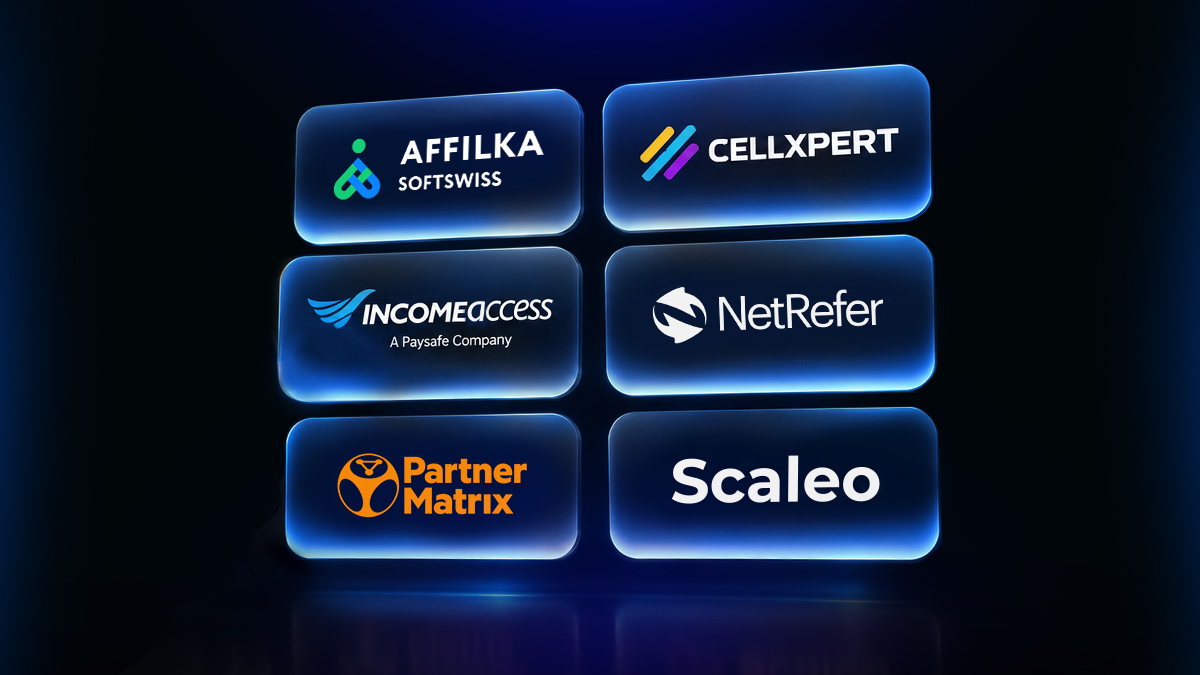
Here are six platforms worth evaluating when building your shortlist.
1. Income Access

Best for: Operators seeking affiliate management and marketing services alongside tracking technology.
Income Access provides affiliate program management software and network services for online casinos, sports betting, bingo, poker, and other gaming verticals. Its published offering includes multi-channel tracking, acquisition attribution, reporting, and commission and payment management.
Key features to evaluate:
Affiliate acquisition and conversion tracking across supported channels.
Reporting for evaluating affiliate and campaign performance.
Commission administration and payment processing options.
Access to affiliate marketing expertise and network services.
Integration requirements for your casino platform and existing marketing systems.
Who should consider it?
Operators looking for a combination of tracking technology and affiliate program support may find Income Access worth considering. Before committing, confirm the availability of required integrations, the exact services included in your contract, and the pricing structure for your operation.
2. NetRefer

Best for: Operators requiring configurable affiliate management, reporting, and commission structures.
NetRefer offers an affiliate management platform designed for online casinos and sportsbooks. Its published capabilities include affiliate and media management, performance reporting, payment administration, and configurable reward plans.
Key features to evaluate:
Affiliate, sub-affiliate, and media management.
Reporting across affiliates, players, brands, campaigns, and payments.
Configurable CPA, revenue share, hybrid, and tiered commission plans.
Affiliate communications and tracking-link management.
API and data integration options for operational reporting.
Who should consider it?
NetRefer is worth evaluating if your affiliate program requires detailed administrative controls and configurable reporting. Operators managing multiple markets or brands should ask for a demonstration using their actual reporting dimensions, commission rules, and partner workflows.
3. Cellxpert

Best for: Operators prioritizing detailed tracking, commission automation, and auditability.
Cellxpert's published product documentation describes real-time tracking of clicks, registrations, and deposits; server-to-server postbacks; configurable commission plans; cohort analysis; and affiliate payment workflows. It also documents compliance controls and audit trails.
Key features to evaluate:
Real-time tracking and conversion monitoring.
CPA, revenue share, and hybrid commission management.
Customizable reporting, cohort analysis, and player lifetime value metrics.
Affiliate and sub-affiliate hierarchy management.
Payment workflows, permissions, and audit trails.
Integration support for casino platforms and mobile attribution systems.
Who should consider it?
Cellxpert deserves consideration if your team needs detailed partner reporting and clearly documented commission and payment processes. During a demo, test how the platform reconciles conversion events, handles commission adjustments, and exposes data to affiliates and internal finance teams.
4. Scaleo
Best for: Businesses evaluating a flexible affiliate tracking solution for performance marketing.
Scaleo is an affiliate tracking platform to consider when evaluating tracking links, campaign attribution, conversion reporting, and automation. Its suitability for a casino program depends on the specific product configuration and integrations available.
Key features to verify:
Click, conversion, and campaign tracking.
Server-to-server tracking and postback configuration.
Affiliate and campaign reporting.
Fraud detection and traffic quality controls.
Commission logic appropriate for your business model.
Compatibility with your casino platform, CRM, and financial reporting.
Who should consider it?
Scaleo may be worth shortlisting if you want to compare general-purpose affiliate tracking technology against specialist iGaming software. Do not assume that every gambling-specific requirement is supported. Request confirmation of deposit tracking, player-level reporting, commission calculations, and relevant compliance capabilities before making a decision.
5. Affilka by SOFTSWISS

Best for: Operators evaluating a specialist affiliate platform within an iGaming technology ecosystem.
Affilka is an iGaming affiliate management solution associated with SOFTSWISS. It is a relevant candidate for operators comparing affiliate tracking, commission administration, and reporting within their wider gaming technology stack.
Key features to verify:
Affiliate registration, management, and reporting.
CPA, revenue share, and hybrid commission options.
Tracking accuracy for registrations and first-time deposits.
Multi-brand functionality and market-specific reporting.
Integration with your existing casino platform and player account systems.
Migration support, onboarding, and technical assistance.
Who should consider it?
Operators already using or evaluating compatible SOFTSWISS technology may want to assess Affilka as part of their broader platform decision. Other operators should compare the full integration requirements, implementation costs, and contractual terms against competing solutions.
6. PartnerMatrix

Best for: Operators looking to evaluate another specialist iGaming affiliate management solution.
PartnerMatrix is another platform to include in a specialist iGaming software shortlist. Its suitability should be assessed against your required tracking events, commission structures, partner management workflows, and integrations.
Key features to verify:
Affiliate tracking and conversion attribution.
Affiliate management and commission configuration.
Reporting and payment workflows.
Multi-brand and multi-market support.
API availability and compatibility with your gaming platform.
Support, implementation, and migration arrangements.
Who should consider it?
Include PartnerMatrix in your evaluation if its documented capabilities and commercial proposal align with your requirements. Ask for a live demonstration and a written feature confirmation rather than relying on a general product overview.
Casino Affiliate Tracking Software Comparison Table
The table below summarizes the main evaluation angles for each platform. It is a shortlist, not a universal ranking: actual functionality, pricing, and integration availability must be confirmed with each vendor.
Platform | Main evaluation focus | What to verify before buying |
Income Access | Affiliate management, attribution, payments | Service scope, integration coverage, contract costs |
NetRefer | Affiliate administration, reporting, reward plans | Required workflows, APIs, custom reporting |
Cellxpert | Tracking, commission automation, auditability | Integration details, permissions, reporting configuration |
Scaleo | Affiliate tracking and campaign analytics | iGaming-specific functionality and deposit tracking |
Affilka by SOFTSWISS | Affiliate management in an iGaming ecosystem | Gaming platform compatibility, brand support |
PartnerMatrix | Specialist iGaming affiliate management | Current product scope, integrations, implementation |
How should you use this comparison? Select two or three platforms that meet your non-negotiable requirements. Then compare them using the same test cases, sample conversion data, commission agreements, and reporting questions. A consistent evaluation is far more useful than comparing marketing claims.
What Is Casino Affiliate Tracking Software and How Does It Work?
Casino affiliate tracking software records and attributes the traffic and player activity generated by affiliate partners. It gives operators a way to measure acquisition performance, calculate commissions, and understand which partnerships contribute to business results.
A typical affiliate tracking process works as follows:
Affiliate link creation: The operator generates a unique referral link for an affiliate, campaign, or traffic source.
Click tracking: When a prospective player clicks the link, the tracking system records the referral and relevant attribution information.
Registration attribution: When the player registers, the casino platform communicates the relevant conversion event to the tracking system.
Deposit tracking: The system receives a first-time deposit event or another agreed conversion event through a supported integration.
Commission calculation: The platform applies the relevant CPA, revenue share, hybrid, or custom commission rules.
Performance reporting: Affiliate managers and authorized partners review clicks, registrations, deposits, revenue, and commissions.
Payment and reconciliation: The operator validates the figures, resolves discrepancies, and processes approved commissions.
The technical implementation varies. Some systems use cookies or browser-based tracking, while others rely on server-to-server postbacks, APIs, or combinations of tracking methods. Cross-device attribution and mobile app tracking may require additional integration work.
It's also important to distinguish affiliate tracking software from an affiliate network. Tracking software provides the technology for running and measuring an affiliate program. An affiliate network can additionally connect operators with publishers and provide partner discovery, relationship management, or other services.
For an operator, the goal is straightforward: connect marketing activity to validated business outcomes and make the resulting data reliable enough for both marketing and finance.
Essential Features to Look for in Casino Affiliate Tracking Software
Not every platform offers the same depth of functionality. Before choosing a solution, separate essential features from optional extras.
1. Accurate tracking and attribution
Tracking is the foundation of the entire system. If a legitimate referral is not attributed correctly, an affiliate may not receive the commission they earned. If duplicate or invalid conversions are counted, the operator may overpay.
Look for:
Unique affiliate and campaign identifiers.
Support for click, registration, and deposit events.
Configurable attribution rules.
Server-to-server postbacks and API integrations.
Conversion validation and discrepancy reporting.
Testing tools for tracking links and conversion events.
Ask vendors to demonstrate how the system handles expired sessions, duplicate events, redirects, and changes in the player journey.
2. Flexible commission management
Casino affiliate programs often use different commercial arrangements for different partners. Your software should be able to represent those agreements accurately.
Essential capabilities include configurable CPA, revenue share, hybrid, and tiered commissions; partner-specific terms; campaign-level rules; and transparent calculations.
Check whether the platform supports negative carryover, minimum thresholds, revenue deductions, and custom net gaming revenue definitions where required by your agreements.
3. Reporting and analytics
A useful dashboard should help your team understand performance, not merely display activity.
Look for reports covering:
Clicks and click-to-registration conversion rates.
Registrations and qualified first-time depositors.
Deposit activity and net gaming revenue, where available.
Commission liabilities and approved payments.
Affiliate acquisition cost and return on investment.
Player retention and lifetime value.
Performance by affiliate, campaign, GEO, device, and brand.
The more detailed your program becomes, the more important flexible reporting and data exports are.
4. Fraud detection and traffic quality controls
Affiliate fraud can take many forms, including bots, duplicate registrations, misleading traffic sources, and manipulated conversion events.
Useful controls may include traffic anomaly alerts, duplicate detection, suspicious conversion patterns, affiliate verification, and investigation logs.
Automated flags should support human review rather than automatically treating every unusual event as fraud. A sudden increase in conversions may reflect a successful campaign, a technical issue, or malicious activity. Context matters.
5. Affiliate portal and partner communication
Affiliates need access to reliable performance data and the marketing materials required to promote your brand.
A good affiliate portal should offer:
Referral link and campaign management.
Approved banners and other marketing creatives.
Accessible performance reports.
Commission statements and payment status.
Communication tools and support information.
Appropriate permissions for different partner types.
Transparent reporting can reduce disputes and make affiliate relationships easier to manage.
6. Integration and automation
Manual data transfers introduce delays and create opportunities for errors. Strong integrations help affiliate managers and finance teams work from consistent information.
Evaluate integrations with your casino platform, player account management system, CRM, payment systems, analytics tools, and business intelligence environment. Confirm whether integrations are native, partner-built, or require custom development.
Automation can reduce repetitive work in reporting, commission calculations, approvals, and payment reconciliation. However, automated processes still need clear rules, monitoring, and audit trails.
7. Multi-brand and multi-GEO support
If you operate several casino brands or target multiple markets, your platform should reflect that complexity.
Verify support for:
Separate brand-level reporting and permissions.
Multiple currencies and languages.
Affiliate agreements that vary by market.
Country-specific traffic restrictions.
Consolidated reporting across brands.
Different commission rules for products, affiliates, and GEOs.
Don't assume that a vendor's general claim of multi-brand support means every reporting and commission requirement is included in its standard package.
8. Security, privacy, and compliance
Casino affiliate programs process commercially sensitive information and may handle personal data. Security and compliance should therefore be part of the initial evaluation.
Review user permissions, audit logs, data retention, encryption, data processing terms, and procedures for handling access requests. Confirm that the platform can support your obligations under applicable privacy laws, gambling regulations, and advertising rules.
Software alone does not make an affiliate program compliant. The operator remains responsible for understanding the laws and licensing requirements applicable to its markets.
How Casino Affiliate Tracking Software Handles Commission Models
The commission model determines how affiliates are rewarded for acquiring players. The tracking platform must calculate these commissions consistently, apply the terms agreed with each partner, and make the results easy to verify.
Revenue share
Under a revenue share model, affiliates receive an agreed percentage of qualifying revenue generated by the players they refer.
For example, suppose an affiliate's referred players generate €20,000 in monthly net gaming revenue, and the agreed commission is 30%.
The illustrative commission would be:
\[ €20{,}000 \times 30\% = €6{,}000 \]
The actual payable amount depends on the contract's definition of net gaming revenue, including applicable deductions, adjustments, and any negative carryover provisions.
What tracking software should support: Configurable revenue definitions, affiliate-level commission rates, historical calculations, and transparent reporting.
Cost per acquisition (CPA)
Under a CPA model, the operator pays a fixed commission for each qualifying acquisition. In casino affiliate marketing, this often means a first-time depositor who satisfies the agreed eligibility criteria.
For example, if the agreed CPA is €150 and an affiliate generates 40 approved first-time depositors, the commission would be €6,000.
The operator should define qualifying conditions clearly, including deposit thresholds, duplicate-account rules, geographical restrictions, and the treatment of suspicious traffic.
What tracking software should support: Conversion validation, qualification rules, approval workflows, and accurate reporting of payable acquisitions.
Hybrid affiliate commissions
Hybrid deals combine CPA payments with revenue share. They can help operators and affiliates agree on a balance between immediate acquisition rewards and longer-term player value.
For example, a deal might pay €75 per qualifying first-time depositor plus 20% of qualifying net gaming revenue.
The software must calculate both components correctly, apply any thresholds or exclusions, and show affiliates how their final commissions were determined.
Tiered and custom commission structures
Some operators offer different commission rates depending on affiliate performance, player quality, product, GEO, or negotiated commercial terms.
The tracking system should make these rules manageable without relying on spreadsheets and manual calculations. It should also retain a clear history of changes to commission agreements.
Important: Before choosing a platform, test your real commission structures using sample data. A vendor may support revenue share in general but still lack a specific rule your business needs.
Affiliate Tracking Accuracy, Attribution, and Conversion Reporting
A tracking system is only as useful as the data it captures. Accurate attribution is essential for paying affiliates fairly and understanding which acquisition sources generate valuable players.
Understanding affiliate attribution
Attribution determines which affiliate or marketing source receives credit for a conversion.
Common approaches include:
Last-click attribution: Credits the last eligible referral click before conversion, according to the configured rules.
First-click attribution: Credits the first eligible referral interaction.
Custom attribution rules: Apply predefined logic to specific channels, campaigns, or partner arrangements.
The right model depends on your affiliate agreements and marketing strategy. Whichever approach you choose, document it and apply it consistently.
Why server-to-server tracking matters
Server-to-server (S2S) tracking allows systems to exchange conversion events directly between servers rather than relying exclusively on browser-side tracking.
For casino operators, this can support more reliable reporting of registrations, deposits, and other agreed events. However, S2S integration still requires correct configuration, event validation, unique identifiers, and appropriate handling of retries and duplicate messages.
Metrics casino operators should monitor
Metric | What it tells you |
Clicks | The volume of tracked referral traffic |
Registration rate | The proportion of tracked clicks resulting in registrations |
First-time depositors (FTDs) | The number of users meeting the agreed first-deposit definition |
Cost per acquisition | The cost of acquiring a qualifying player |
Net gaming revenue | Revenue calculated according to the operator's defined accounting rules |
Revenue share | The commission earned under revenue-share agreements |
Player lifetime value (LTV) | The estimated or observed value of a player over time |
Affiliate ROI | The relationship between affiliate-related returns and costs, based on a clearly defined formula |
Tracking discrepancies should be investigated promptly. Compare click records, registration events, deposit confirmations, attribution rules, and commission calculations across the affiliate platform and casino back office.
Fraud Prevention and Security in Casino Affiliate Programs
Fraudulent or low-quality traffic can distort performance data and create unnecessary acquisition costs. Effective affiliate tracking software helps operators identify suspicious patterns before approving commissions.
Common risks include:
Automated bot traffic generating artificial clicks.
Duplicate or fabricated player registrations.
Misleading traffic sources or unauthorized promotional methods.
Attempts to manipulate qualifying deposit events.
Incentive abuse that violates affiliate agreement terms.
Discrepancies between tracked conversions and verified casino activity.
How tracking software can help
Look for traffic monitoring, duplicate-event detection, anomaly alerts, affiliate verification workflows, and detailed investigation logs.
For example, an affiliate that suddenly generates an unusually high number of registrations but very few qualifying deposits may warrant investigation. The pattern is a warning signal, not proof of fraud.
Your team should be able to review supporting evidence, compare traffic sources, investigate technical issues, and document decisions before rejecting conversions or withholding payments.
Security controls are equally important. Role-based access, audit trails, secure data transfer, and well-defined retention policies help protect sensitive business information.
Ultimately, the strongest fraud prevention combines technology, clear affiliate terms, human oversight, and consistent enforcement.
Integrations: Connecting Affiliate Software With Your Casino Technology Stack
Affiliate tracking software rarely operates in isolation. Its effectiveness depends on how well it exchanges data with the rest of your technology stack.
Before selecting a platform, assess the following integrations.
Casino platform and player account management system: These systems provide information about registrations, deposits, and player activity. Confirm which events can be transmitted and how they are validated.
CRM: Connecting affiliate acquisition data with customer relationship management tools can help teams understand player segments, retention, and lifecycle performance, subject to appropriate data permissions.
Payment systems: Transaction data can help validate deposit events and reconcile financial records. Confirm precisely which data the tracking software receives.
Analytics and business intelligence: APIs, exports, and data pipelines can allow affiliate data to be combined with wider business reporting.
Mobile attribution: If your casino has a mobile app, verify support for the attribution provider and event flows required to connect referrals, installs, registrations, and deposits.
Automation tools: Webhooks and APIs can reduce manual reporting and approval work when the necessary integration endpoints are available.
Ask each vendor to document its native integrations, supported APIs, custom-development requirements, and implementation responsibilities. A platform with an impressive feature list may still be a poor fit if connecting it to your existing systems requires significant additional work.
How Much Does Casino Affiliate Tracking Software Cost in 2027?
There is no single price that applies to every casino affiliate tracking platform. Enterprise contracts, product configurations, integrations, and commercial requirements can differ considerably.
Vendors may use several pricing structures:
Subscription pricing: A recurring fee for access to the software.
Enterprise contracts: Custom pricing based on the operator's requirements and agreement.
Setup and onboarding fees: Charges for initial configuration, implementation, or migration.
Usage-based pricing: Fees linked to an agreed usage metric, where applicable.
Additional service fees: Costs for custom integrations, advanced support, or additional functionality.
Exact prices for the platforms discussed above should be requested directly from the vendors unless current public pricing is available for the required package.
How to calculate total cost of ownership
Don't compare software based only on its headline subscription price. Calculate the expected cost over the period you intend to use the platform.
Include:
Initial implementation and integration.
Recurring licensing or subscription fees.
Migration of existing affiliate data and agreements.
Staff training and operational support.
Ongoing maintenance and custom development.
Payment processing or other additional service charges, where applicable.
The internal cost of managing reporting discrepancies and manual work.
A more expensive platform may provide better value if it substantially reduces operational overhead. Conversely, an enterprise solution may be unnecessarily complex for a small affiliate program.
Request a written quote that specifies what's included, which limits apply, how fees can change, and what happens to your data if you leave the platform.
How to Choose the Best Affiliate Tracking Software for Your Casino
The best selection process starts with your operational requirements, not a vendor's sales presentation.
1. Define your affiliate program requirements
Establish whether you're launching a new casino, managing an established sportsbook, or operating multiple brands. Document affiliate volumes, target GEOs, commission agreements, and reporting needs.
2. Check integrations and technical compatibility
Identify the systems that must exchange data with your tracking platform. Confirm support for your casino platform, CRM, payment systems, APIs, and mobile attribution requirements.
3. Test tracking and reporting
Ask vendors to demonstrate how clicks, registrations, deposits, commission calculations, and adjustments are recorded. Use realistic sample data and reconcile results against your internal records.
4. Evaluate fraud prevention and compliance
Review traffic monitoring, investigation workflows, access permissions, audit trails, and data protection features. Confirm that the software can support your operating requirements in each target jurisdiction.
5. Compare pricing and implementation costs
Request comparable proposals covering licensing, onboarding, integrations, support, migration, and contract terms. Estimate total cost of ownership over the same period for each vendor.
6. Run a proof of concept
Where possible, test shortlisted systems using representative traffic and conversion scenarios. Verify attribution, duplicate-event handling, commission calculations, report exports, and exception workflows before committing.
A practical vendor evaluation scorecard
Use this scorecard to compare vendors consistently. The weights below are illustrative and can be adjusted to your business priorities.
Rate each vendor from 1 (poor) to 5 (excellent). Leave any criterion at 0 until you have enough information.
Tracking accuracy and attribution
Weight: 25%
Commission management
Weight: 15%
Integrations and APIs
Weight: 15%
Reporting and analytics
Weight: 15%
Fraud prevention and security
Weight: 10%
Pricing and total cost
Weight: 10%
Support and implementation
Weight: 10%
Weighted score
0.0 / 100
This score is calculated from your ratings, with unrated criteria counted as zero. It is a decision aid, not an independent vendor rating.
This score is calculated from your ratings, with unrated criteria counted as zero. It is a decision aid, not an independent vendor rating.
Use the same scorecard for each shortlisted platform. A high total score should not override a critical requirement that the vendor cannot meet.
Common Mistakes to Avoid When Choosing Casino Affiliate Software
Even experienced operators can overlook important details when evaluating affiliate technology.
Choosing based on price alone. Lower licensing costs may be offset by expensive integrations, manual reconciliation, or limited reporting.
Assuming general-purpose software supports every iGaming workflow. Verify deposit tracking, player attribution, commission logic, and other gambling-specific requirements.
Ignoring data migration. Historical conversion data, commission agreements, affiliate IDs, and payment records may need careful handling when switching systems.
Failing to test conversion tracking. Small attribution or duplicate-event problems can lead to persistent reporting discrepancies and payment disputes.
Overlooking data ownership and portability. Confirm your rights to export affiliate information, transaction histories, and reporting data, as well as the procedures for leaving the platform.
Treating every unusual conversion pattern as fraud. Investigate suspicious activity using evidence and consistent policies rather than relying on automated alerts alone.
Neglecting affiliate experience. Confusing dashboards, unexplained commission adjustments, and delayed support can undermine partner relationships.
Expanding without checking local requirements. Confirm that your affiliate activities, promotional methods, and software configuration are appropriate for the laws and licensing requirements of every target market.
Trends in Casino Affiliate Tracking Technology for 2027
Affiliate tracking is evolving alongside broader changes in analytics, automation, privacy, and performance marketing. Operators should distinguish capabilities already demonstrated by a vendor from features that remain emerging or require additional development.
AI-assisted analytics and anomaly detection
AI tools can help identify unusual traffic patterns, summarize performance changes, and make large reporting datasets easier to explore. Some platforms are already promoting AI-assisted reporting capabilities, but their practical value depends on data quality and the reliability of their outputs.
Privacy-conscious attribution
Changes in browser tracking, consent requirements, and privacy regulation increase the importance of robust server-side event handling and clear data governance.
Operators should evaluate how each vendor handles consent, data minimization, retention, and attribution limitations. Server-to-server tracking is useful, but it does not remove legal obligations or guarantee complete attribution.
Greater automation
Automated commission calculations, scheduled reporting, reconciliation workflows, and partner notifications can reduce repetitive administrative work.
The most useful automation is transparent and auditable. Teams should be able to understand why a commission was calculated, why a conversion was rejected, and how an adjustment was made.
More advanced player-value analysis
Operators increasingly need to understand the value of acquired players over time, rather than judging affiliate performance exclusively by registrations or first-time deposits.
Cohort analysis, retention reporting, and lifetime value estimates can help teams compare acquisition quality. These metrics should be interpreted carefully, particularly when cohorts are small or revenue patterns change over time.
More connected marketing data
API integrations and centralized reporting can help operators combine affiliate performance with wider acquisition and financial data.
The opportunity is not simply to collect more data. It is to build a consistent view of costs, player activity, commission obligations, and business outcomes.
Frequently Asked Questions About Casino Affiliate Tracking Software
What is the best affiliate tracking software for casinos in 2027?
There is no universal winner. Income Access, NetRefer, Cellxpert, Scaleo, Affilka by SOFTSWISS, and PartnerMatrix are candidates to evaluate, depending on your requirements. Compare tracking accuracy, integrations, commission flexibility, reporting, security, and total cost before making a decision.
What is the difference between casino affiliate tracking software and an affiliate network?
Affiliate tracking software provides the technology for tracking referrals, attributing conversions, calculating commissions, and reporting results. An affiliate network can additionally connect advertisers with publishers and provide partner discovery or management services. Some providers offer both software and network services.
Can casino affiliate software track first-time deposits?
Yes, platforms can track first-time deposits when the required event data is available and the relevant integration is correctly configured. Confirm how the system validates qualifying deposits, handles duplicate events, and reconciles results with the casino back office.
Which commission models should casino affiliate software support?
Common models include CPA, revenue share, hybrid commissions, and tiered or custom arrangements. Your software should support the actual rules in your affiliate agreements, including applicable thresholds, deductions, and adjustments.
How can casino operators prevent affiliate fraud?
Use traffic monitoring, duplicate detection, conversion validation, affiliate verification, anomaly alerts, and documented investigation workflows. Combine automated controls with human review, clear contracts, and consistent enforcement.
How long does it take to implement casino affiliate tracking software?
Implementation time depends on the vendor, the complexity of your technology stack, the number of brands, data migration requirements, and testing. Request a project plan that identifies integration dependencies, milestones, responsibilities, and go-live criteria.
Is general affiliate tracking software suitable for online casinos?
Sometimes, but suitability must be verified. General-purpose software may offer useful tracking and analytics while lacking specific casino integrations, player-level reporting, commission rules, or compliance controls. Test the platform against your actual workflows before purchasing.
Can affiliate tracking software manage multiple casino brands and GEOs?
Some platforms support multi-brand and multi-market operations. Confirm that your chosen solution can handle the required brand permissions, currencies, reporting dimensions, commission rules, and geographical restrictions.
What is the difference between CPA and revenue share in casino affiliate marketing?
CPA pays an agreed amount for each qualifying acquisition, while revenue share pays an agreed percentage of qualifying player-generated revenue. Hybrid agreements combine both. The appropriate model depends on commercial terms, acquisition economics, and the operator's strategy.
What should casino operators ask during a software demo?
Ask vendors to demonstrate a complete tracking journey from affiliate click to registration, qualifying deposit, commission calculation, and reporting. Also request examples of duplicate-event handling, reconciliation, fraud investigation, data exports, integrations, and migration procedures.
Conclusion: Choose Casino Affiliate Software That Supports Profitable Growth
Choosing the best affiliate tracking software for casinos in 2027 is about much more than counting clicks or paying commissions. The right platform connects acquisition activity to verified player events, helps affiliate managers understand performance, and gives finance teams confidence in commission calculations.
Income Access, NetRefer, Cellxpert, Scaleo, Affilka by SOFTSWISS, and PartnerMatrix offer different options to investigate. Your final decision should depend on verified product capabilities, technical compatibility, reporting requirements, security, implementation effort, and total cost of ownership.
For a smaller operator, straightforward implementation and essential tracking may be the priority. For an established multi-brand business, advanced reporting, flexible commission structures, and integration depth may matter more.
Our advice is simple: define your requirements, shortlist the platforms that meet them, and test real tracking and commission scenarios before signing a contract. Reliable data is the foundation of better affiliate decisions.
Need help building a more effective iGaming affiliate marketing strategy?
At The Point, we help iGaming businesses evaluate their digital marketing opportunities and develop strategies around measurable performance. Contact our team to discuss your affiliate acquisition goals, tracking requirements, and opportunities to improve campaign efficiency.
Editorial note: Platform features and commercial terms can change. Before publishing this article in 2027, verify all vendor claims, current product availability, integrations, and pricing directly with the providers. The platforms listed are not presented as an independently tested or definitive ranking.
Related reading

What Is the Best Casino Affiliate Program in India? 2027 Guide
Navigating India's iGaming affiliate landscape requires more than chasing headline 50% rev share rates. Compare top affiliate programs for 2027—evaluating CPA economics, local payment methods (like UPI), NGR deductions, and GEO compliance.

Best Revenue Share Casino Programs for Affiliates in 2026
Revenue share remains the gold standard for long-term passive income in iGaming. Compare the top casino affiliate programs of 2026, evaluating rev share rates, negative carryover terms, payout reliability, and player retention.